
I made these after one batch turned purple instead of black. Now these Halloween candy apples look properly spooky and still taste great.
The glossy shell is easier than it looks. This black candy apples recipe uses tart apples, hot sugar, and just enough drama.
Kids stared before taking the first bite. These spooky candy apples are now my favorite fun Halloween food for kids.
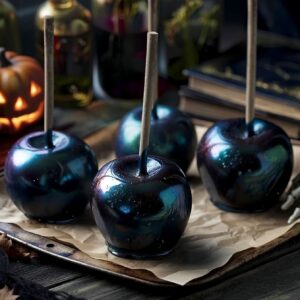
Halloween Poison Candy Apples
EQUIPMENT (PAID LINKS)
- Clean kitchen towel
- Parchment paper or silicone baking mat
- Heavy-bottomed medium saucepan
- Heatproof spoon or spatula
- Candy thermometer
- Wooden candy-apple sticks
- Small bowl of ice water, optional
Ingredients
- 6 large Granny Smith apples
- 6 wooden candy-apple sticks or cleaned untreated food-safe twigs
- 1 teaspoon vegetable oil or as needed
- 2 cups granulated sugar
- ½ cup light corn syrup
- ¾ cup water
- ½ teaspoon blue gel food coloring
- ¼ teaspoon black gel food coloring
Instructions
- Clean the Apples: Wash the apples under hot running water while rubbing them with a clean kitchen towel. Dry them completely so the candy coating can stick properly.6 large Granny Smith apples
- Insert the Sticks: Remove the apple stems. Push one wooden candy-apple stick firmly into the center of each apple.6 wooden candy-apple sticks or cleaned
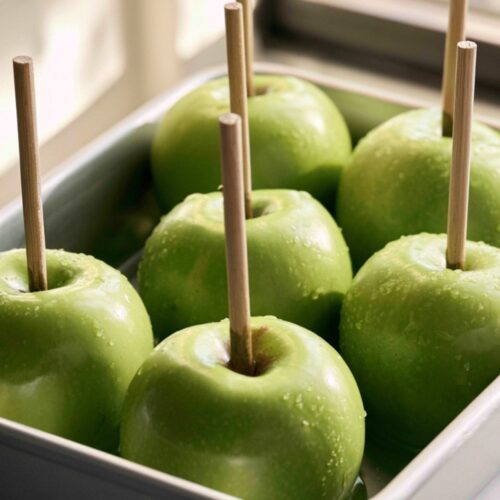
- Prepare the Baking Sheet: Line a baking sheet with parchment paper or a silicone baking mat. If using parchment paper, lightly grease it with vegetable oil to prevent sticking.1 teaspoon vegetable oil
- Combine the Candy Ingredients: Add the sugar, corn syrup, water, blue gel food coloring, and black gel food coloring to a heavy-bottomed saucepan. Stir over medium heat until the sugar dissolves and the mixture is evenly colored.2 cups granulated sugar, ½ cup light corn syrup, ¾ cup water, ½ teaspoon blue gel food coloring, ¼ teaspoon black gel food coloring
- Attach the Thermometer: Clip the candy thermometer to the side of the saucepan. Make sure the tip is submerged in the syrup but does not touch the bottom of the pan.
- Boil the Syrup: Bring the mixture to a boil over medium heat. Once it begins boiling, stop stirring.
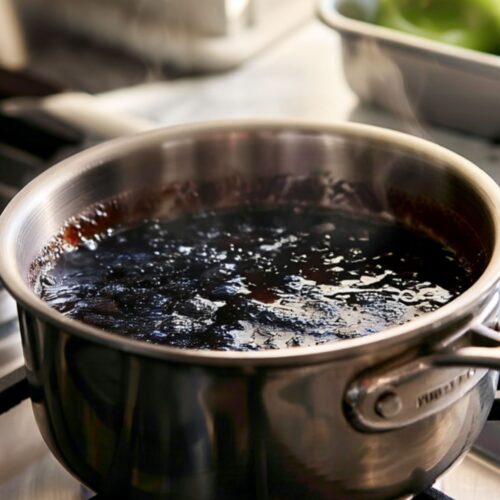
- Cook to Hard-Crack Stage: Continue boiling the syrup until it reaches 300°F. This may take about 15 to 20 minutes, but use the temperature rather than the cooking time to decide when it is ready.
- Test Without a Thermometer: Drop a small amount of syrup into a bowl of ice water. It should harden immediately, feel brittle, and crack when bent. You can also drizzle a little syrup from a fork; it should cool into firm, brittle strands.
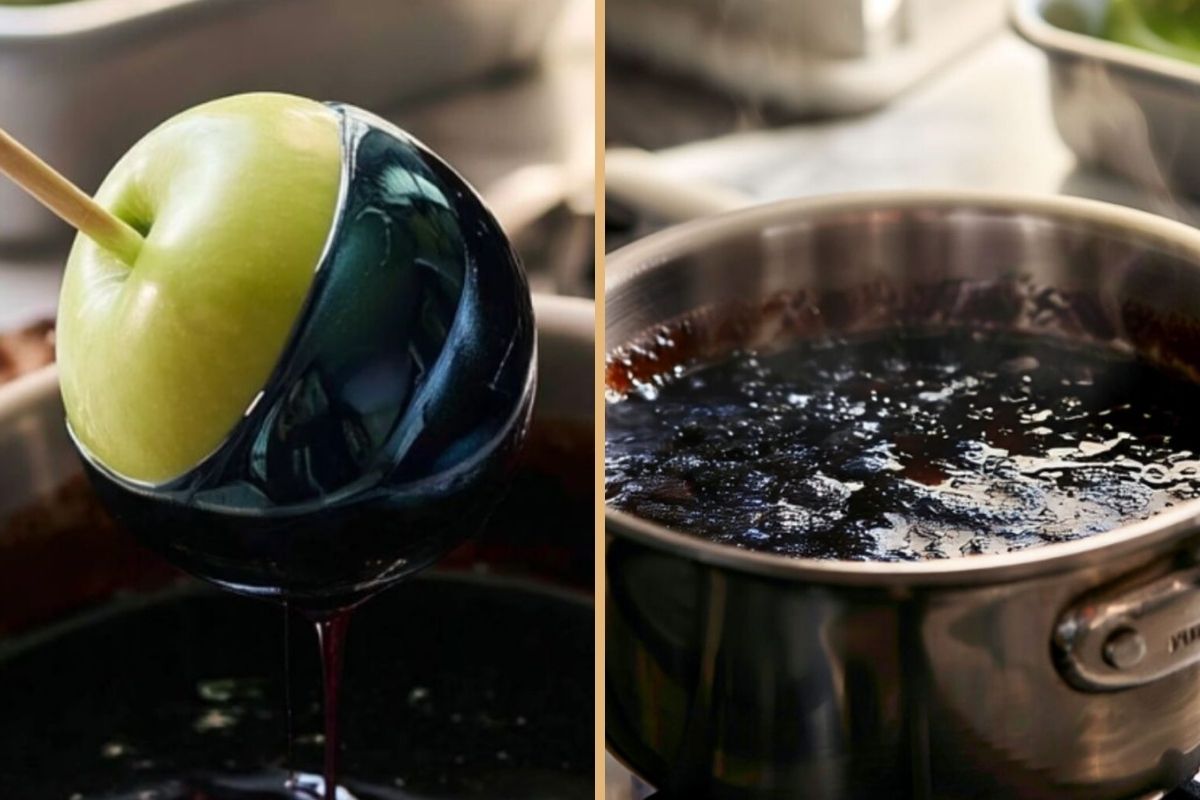
- Coat the Apples: Remove the saucepan from the heat. Hold one apple by the stick and carefully dip it into the hot candy syrup. Tilt the saucepan and slowly rotate the apple until it is evenly coated.
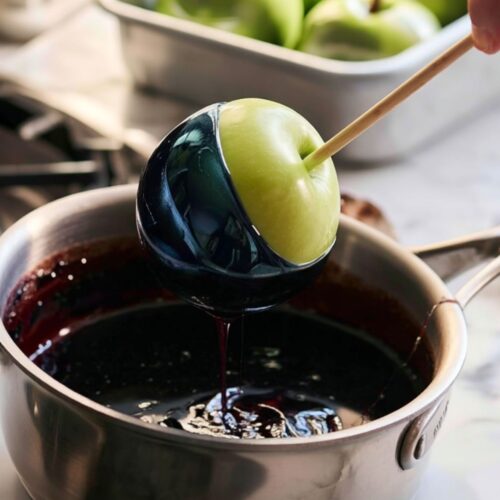
- Drain the Excess: Lift the apple out of the syrup and allow the extra coating to drip back into the saucepan. Hold the apple upside down for a few seconds to prevent a thick puddle from forming at the bottom.
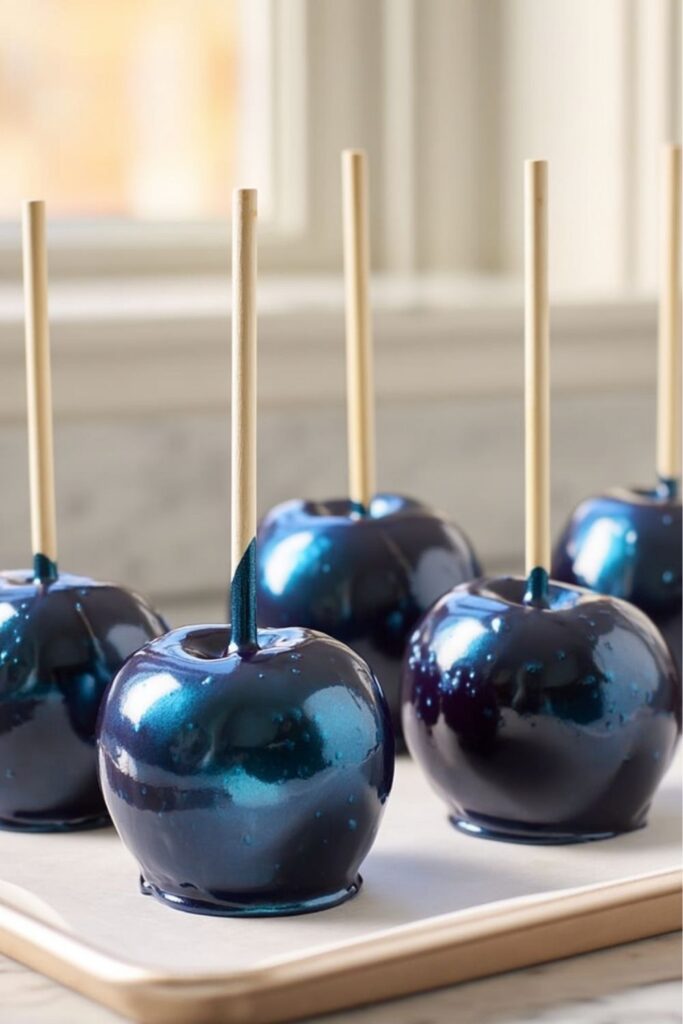
- Cool the Apples: Place the coated apple on the prepared baking sheet. Repeat with the remaining apples, then let them cool completely until the candy shell is firm.
- Add a Second Coat if Needed: If an apple has bare spots or an unusually thin coating, gently reheat the remaining syrup over low heat and dip it again. Skip the second coat when the first layer already covers the apple evenly.
- Reheat the Syrup if Needed: If the candy syrup begins to harden before all the apples are coated, return the saucepan to low heat just until the mixture becomes fluid again.
- Store the Apples: Keep the finished apples in an airtight container or wrap them tightly in cellophane. Do not let them touch each other, and serve within two days for the best texture.
Halloween Poison Apples with a Glass-Crisp Candy Shell Without the Kitchen Meltdown
Hot sugar has zero sense of humor, so a few smart moves help. Learn from my sticky mistakes instead of creating your own.
Start With Cold, Tart Apples
Granny Smith apples are my first choice because their tart flavor keeps the candy shell from becoming a full-blown sugar attack. Fuji or Honeycrisp work too, but avoid soft or overly sweet apples. A crisp apple makes the whole thing feel intentional.
Remove the Wax or Regret Everything
Store-bought apples often have a waxy coating that makes the candy slide right off. Wash them under hot water, rub them well with a clean towel, and dry them completely. Water and hot sugar are not friends, and neither are wax and candy coating.
Use Gel Coloring, Not the Watery Stuff
Liquid food coloring can thin the syrup and may not produce the deep, dramatic color you want. Blue and black gel coloring create that dark poison-apple look without changing the texture. Add the color before boiling unless you enjoy watching 300°F sugar bubble like an angry science project.
A Thermometer Is Worth the Drawer Space
You can test the syrup in ice water, but a candy thermometer removes most of the guessing. Make sure the tip sits in the syrup without touching the bottom of the pan. Candy making is much less mysterious when you stop trying to read its personality.
Choose Your Sticks Carefully
Regular candy-apple sticks are the safest and easiest option. Clean, untreated twigs look wonderfully wicked, but craft-store branches may contain glue, paint, or preservatives. The rustic look is cute; accidentally seasoning dessert with chemicals is less charming.
Keep the Syrup Warm, Not Scorched
The candy coating thickens quickly once it leaves the heat. If it becomes too stiff for dipping, warm it gently over low heat until it loosens again. Do not crank up the burner in a panic. Low heat saves the coating and your dignity.
Tilt the Pan for the Last Few Apples
Once the syrup level gets low, tilt the saucepan and rotate the apple through the deeper pool. This gives better coverage without making another batch. A narrow saucepan also helps because wide pans are excellent at spreading the syrup everywhere except where you need it.
Skip the Second Coat Unless You Need It
A second dip can cover bare spots, but it also creates a thicker shell that may be harder to bite. One even coat is usually enough. These are candy apples, not protective equipment.
Store Them Away From Moisture
Keep the finished apples in a dry, airtight container, separated with parchment paper so they do not touch. Humidity slowly melts the hard shell and turns it sticky. They are best the same day but can usually be kept for up to two days.
Clean the Pan the Lazy Way
Do not scrape hardened sugar from the saucepan like you are excavating a fossil. Fill the pan with water, add the thermometer and any sugar-coated utensils, and bring everything to a boil. The candy dissolves on its own, proving that occasionally the easiest method is also the correct one.