
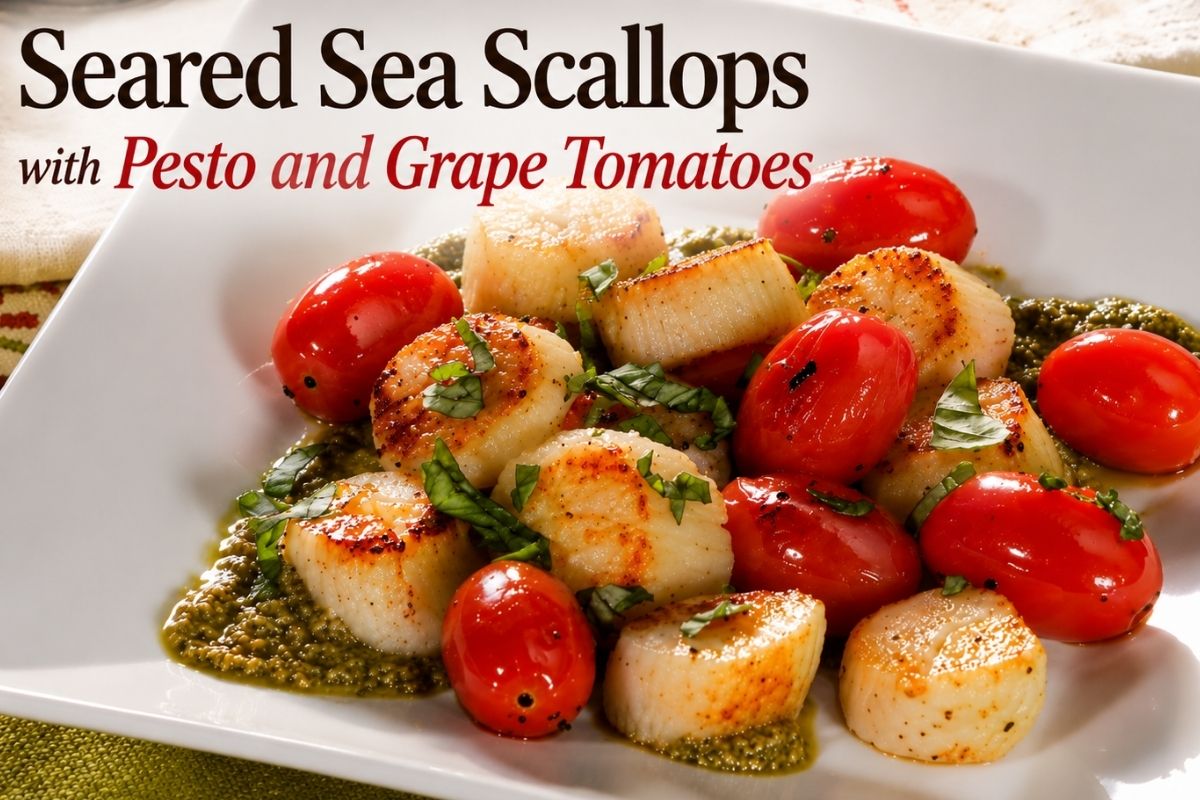
These scallops look fancy, but they’re really just showing off in pesto and juicy tomatoes. Honestly, let them.
I made this once on a rushed weeknight, and the golden crust fooled everyone into thinking I had a plan.
Bright lemon, basil, and balsamic keep it fresh, while the skillet does the hard work. Very generous of it.
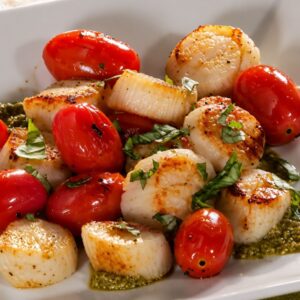
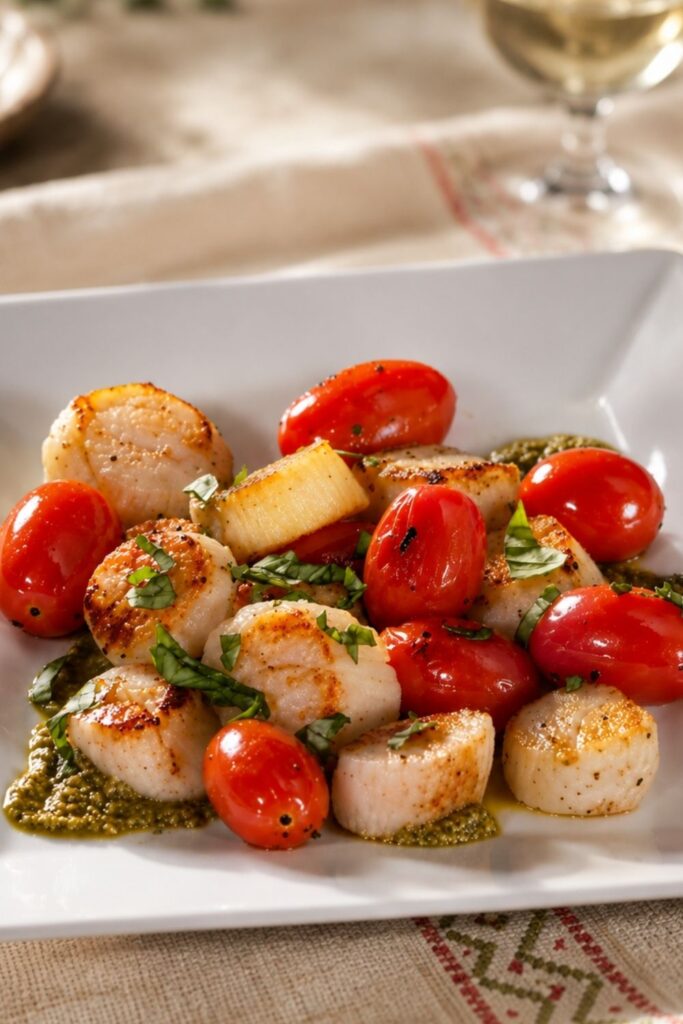
Seared Sea Scallops with Pesto and Grape Tomatoes
EQUIPMENT (PAID LINKS)
- Paper towels
- Large plate
- Large cast-iron skillet
- Serving platter
Ingredients
- 1 ½ pounds large sea scallops
- ¾ teaspoon salt
- ½ teaspoon ground black pepper
- 2 tablespoons olive oil divided
- 1 teaspoon finely grated lemon rind
- 2 tablespoons fresh lemon juice
- 1 tablespoon balsamic vinegar
- 2 cloves garlic minced
- 2 cups grape tomatoes
- ⅓ cup prepared pesto
- 2 tablespoons thinly sliced fresh basil
Instructions
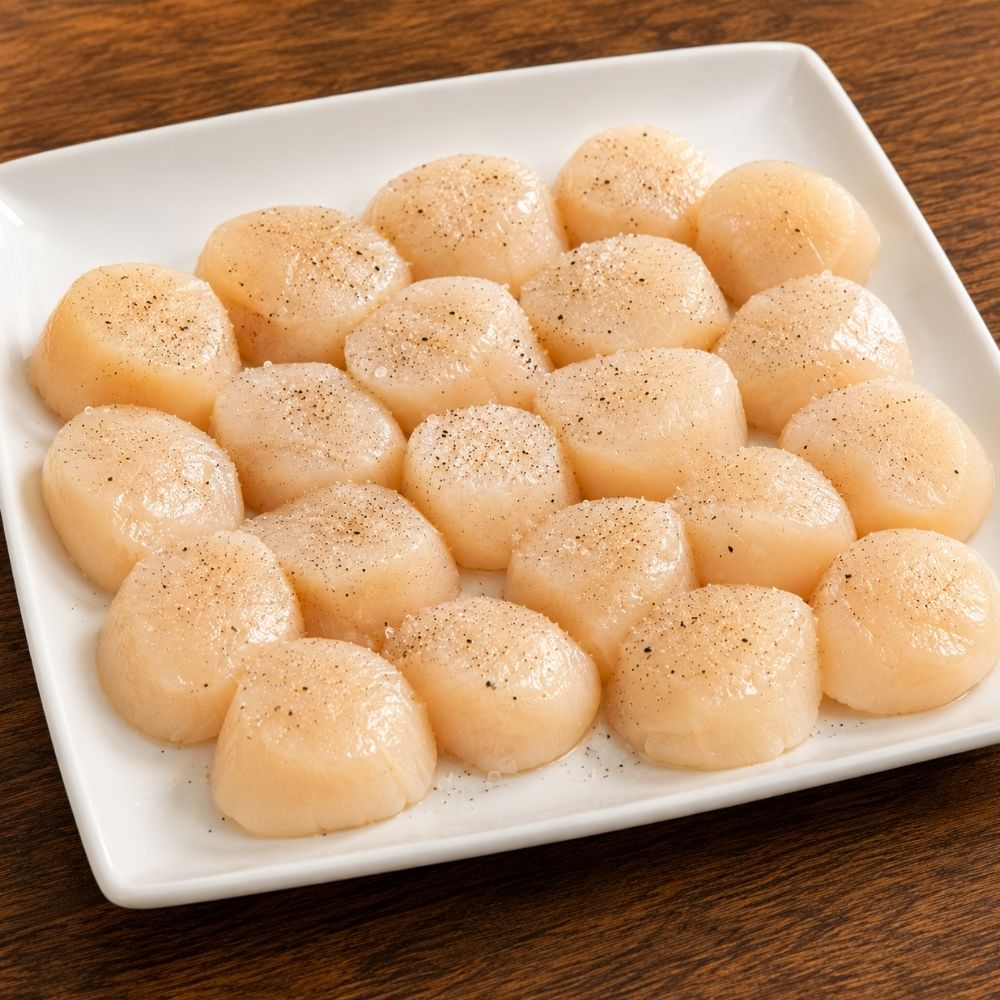
- Dry the Scallops: Pat the scallops thoroughly dry with paper towels. Removing excess moisture helps them develop a deep golden crust instead of steaming in the skillet.
- Season the Scallops: Place the scallops on a large plate. Season both sides evenly with the salt and black pepper.
- Heat the Skillet: Heat a large cast-iron skillet over medium-high heat for about 2 minutes. Add 1 tablespoon of the olive oil and swirl it around the skillet.
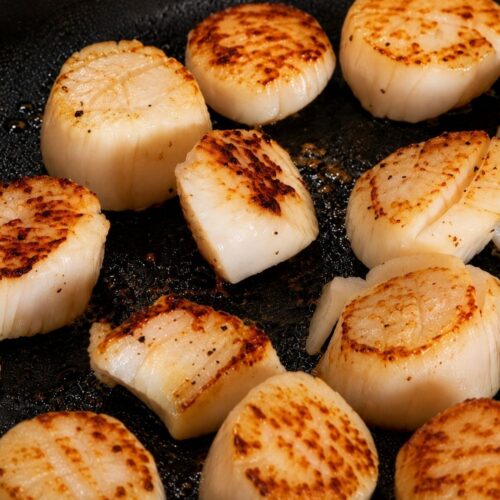
- Sear the First Side: Arrange the scallops in a single layer, leaving a little space between them. Cook without moving them for about 2 minutes, or until the bottoms are deeply golden.
- Cook the Second Side: Turn the scallops with tongs and cook for another 1 to 2 minutes. The scallops should be browned outside and opaque but still tender in the center. Transfer them to a clean plate.
- Add the Lemon Rind: Reduce the heat to medium. Add the finely grated lemon rind to the skillet and stir for about 15 seconds, just until fragrant.
- Add the Lemon Juice: Pour in the lemon juice, scraping the bottom of the skillet to loosen the browned bits. Let it bubble for about 30 seconds.
- Add the Balsamic Vinegar: Pour in the balsamic vinegar and simmer for about 15 seconds.
- Add the Remaining Oil: Stir in the remaining 1 tablespoon olive oil to bring the pan mixture together.
- Cook the Garlic: Add the minced garlic and cook for about 30 seconds, stirring constantly so it does not burn.
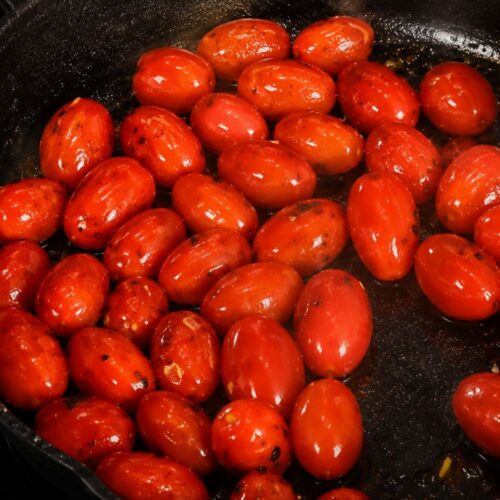
- Cook the Tomatoes: Add the grape tomatoes and stir to coat them in the lemon-balsamic mixture. Cook over medium heat for 3 to 4 minutes, or until the tomatoes are hot, glossy, and beginning to soften.
- Spread the Pesto: Spoon the pesto onto a serving platter and spread it into an even layer.
- Plate the Scallops: Arrange the seared scallops over the pesto. Spoon the warm tomatoes and the pan juices around and between the scallops.
- Finish with Basil: Sprinkle the sliced fresh basil over the scallops and tomatoes. Serve immediately while the scallops are warm and tender.
Video Recipe
Seared Sea Scallops with Pesto and Grape Tomatoes: Fancy Dinner, Minimal Nonsense
I’ve made this enough times to know where things usually go sideways. Consider this your shortcut around the kitchen drama.
Dry Scallops Are Happy Scallops
Scallops need to be seriously dry before they hit the skillet. I press them between paper towels and let them sit for a minute because wet scallops steam, and steamed scallops are just sad little sea marshmallows.
Give Them Some Personal Space
Crowding the pan drops the temperature and ruins that golden crust. Cook them in two batches when needed, even though washing one extra plate feels deeply unfair. A little breathing room is cheaper than wasting good scallops.
Fresh or Frozen Both Work
Frozen scallops are perfectly fine, especially when fresh ones cost more than your monthly streaming subscriptions. Thaw them overnight in the refrigerator, drain well, and dry them thoroughly. Look for dry-packed scallops when possible—they brown better and don’t release a mysterious indoor swimming pool.
No Cast-Iron Skillet? Nobody Panic
A heavy stainless-steel skillet works just as well. Skip thin nonstick pans if possible because they usually don’t hold enough heat for a proper sear. Use the heaviest pan you own and act confident—the scallops can sense fear.
Swap the Tomatoes
Cherry tomatoes, chopped Roma tomatoes, or even drained canned diced tomatoes can replace grape tomatoes. Fresh tomatoes give the best texture, but canned tomatoes work when the produce drawer has betrayed you again. Just drain them well so the sauce stays glossy instead of watery.
Change Up the Pesto
Classic basil pesto is the easy choice, but spinach, arugula, kale, or sun-dried tomato pesto all work. Store-bought pesto is completely acceptable because dinner does not become morally superior just because you washed a food processor.
Use Another Acid
No balsamic vinegar? Try white balsamic, red wine vinegar, or a little extra lemon juice. Start with less and taste as you go since sharper vinegars can take over quickly. You want a bright sauce, not one that removes your fingerprints.
Garlic Shortcuts Are Allowed
Fresh garlic gives the best flavor, but refrigerated minced garlic works on busy nights. Use about 1 teaspoon and keep the heat under control because jarred garlic can brown quickly. Burned garlic will announce itself to everyone in the house, including the neighbors.
Don’t Overcook the Scallops
Scallops keep cooking for a moment after they leave the pan, so pull them when the centers are just opaque and still tender. I’d rather check one early than serve a whole platter of seafood hockey pucks. When in doubt, slightly underdone beats aggressively chewy.
Make the Prep Less Annoying
Measure the lemon juice, vinegar, garlic, and tomatoes before heating the skillet. Once the scallops come out, the sauce moves quickly and there is no graceful way to zest a lemon while garlic burns. A few tiny prep bowls can make you look far more organized than you actually are.
Store Leftovers Carefully
Refrigerate leftovers in an airtight container for up to two days, preferably with the scallops separate from the pesto and tomatoes. Reheat them gently in a skillet over low heat or enjoy them cold over greens. The microwave is fast, but it also turns scallops into very expensive pencil erasers.
Give Leftovers a Second Life
Slice leftover scallops and add them to pasta, risotto, salad, or toasted bread with extra pesto. The tomato mixture also makes a great quick pasta sauce. Call it a planned second meal and nobody needs to know you simply made too much.