
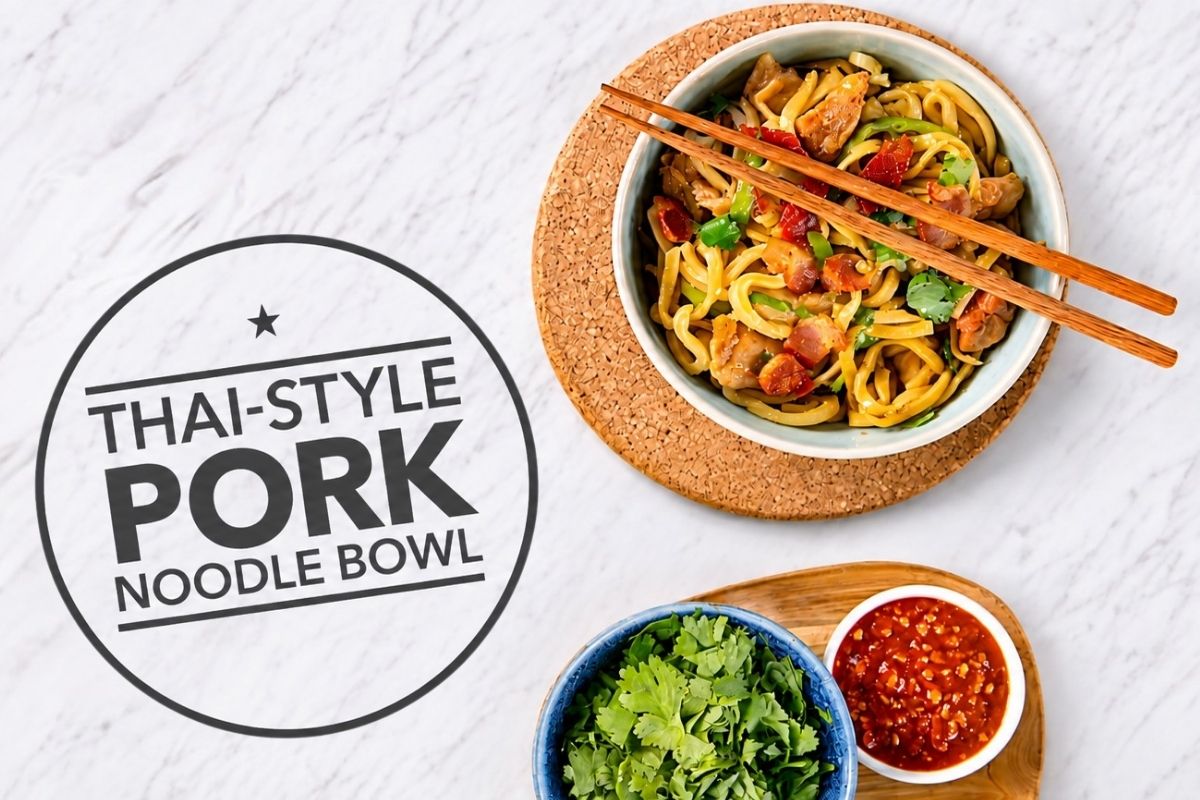
This Thai-Style Pork Noodle Bowl is a little spicy, a little sweet, and ridiculously good. Crispy bacon makes it even harder to resist.
The first time I made it, I thought I’d have leftovers. Cute idea, right? Between the tender pork and saucy noodles, nothing survived.
Snow peas add crunch, lime keeps things fresh, and that savory sauce steals the show. Who needs takeout when dinner tastes this good?
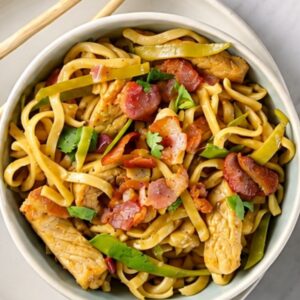
Thai-Style Pork Noodle Bowl
EQUIPMENT (PAID LINKS)
- Large skillet or sauté pan
- Kitchen tongs
- Small bowls
- Citrus juicer
- Microplane or fine grater
- Meat thermometer
Ingredients
- 2 cups fresh snow peas trimmed and thinly sliced lengthwise
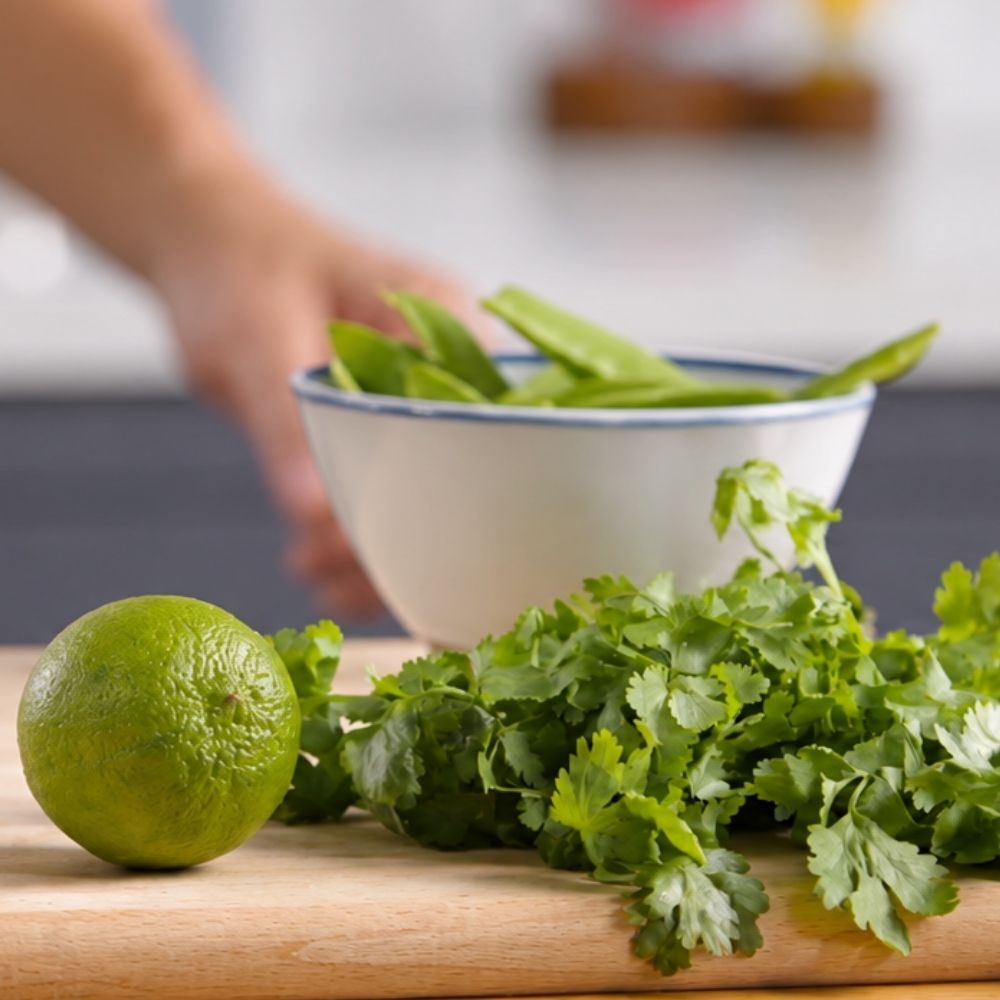
- ¼ cup fresh cilantro chopped
- 1 large lime zested and juiced (about 1 teaspoon zest and 2 tablespoons juice)
- 4 slices bacon chopped into small pieces
- 2 boneless pork loin chops about 12 ounces total, thinly sliced
- ¼ cup red onion finely diced
- 1 tablespoon garlic finely chopped
- 1 tablespoon ginger spice paste
- 1 tablespoon hot pepper sauce
- ¾ cup chicken stock
- 2 tablespoons soy sauce
- 1 tablespoon honey
- 12 ounces cooked stir-fry noodles
Instructions
- Prepare Snow Peas: Rinse the snow peas under cold running water and trim off the ends. Using a sharp knife, slice each snow pea lengthwise into thin strips. Place the sliced snow peas in a small bowl and set aside.
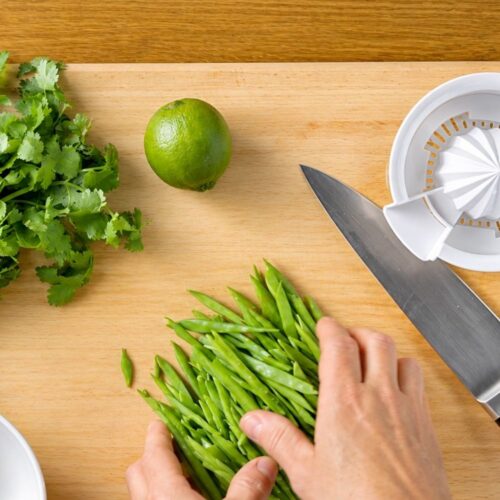
- Chop Cilantro: Gather the fresh cilantro on a cutting board and finely chop the leaves and tender stems. Transfer to a small bowl and set aside for garnishing the finished noodles.
- Zest and Juice Lime: Use a microplane or fine grater to remove about 1 teaspoon of zest from the lime, avoiding the bitter white pith. Cut the lime in half and squeeze out approximately 2 tablespoons of juice. Keep the zest and juice separate.
- Chop and Cook Bacon: Cut the bacon into small, bite-sized pieces. Place a large skillet over medium heat and add the chopped bacon. Cook for 5–7 minutes, stirring occasionally, until golden brown and crispy. Transfer the bacon to a plate, leaving about 1 tablespoon of rendered bacon fat in the skillet.
- Slice Pork: Place the boneless pork loin chops on a clean cutting board. Using a sharp knife, slice the pork against the grain into thin, bite-sized strips to help keep the meat tender.
- Cook Pork: Increase the skillet heat to medium-high. Add the sliced pork to the reserved bacon fat and spread it into an even layer. Cook for 4–6 minutes, stirring occasionally, until lightly browned and the thickest pieces reach an internal temperature of 145°F. Transfer the pork to a clean plate and let it rest for at least 3 minutes.
- Sauté Snow Peas: Return the skillet to medium-high heat. Add the sliced snow peas and stir-fry for 2–3 minutes, stirring frequently with a wooden spoon, until slightly softened but still bright green and crisp.
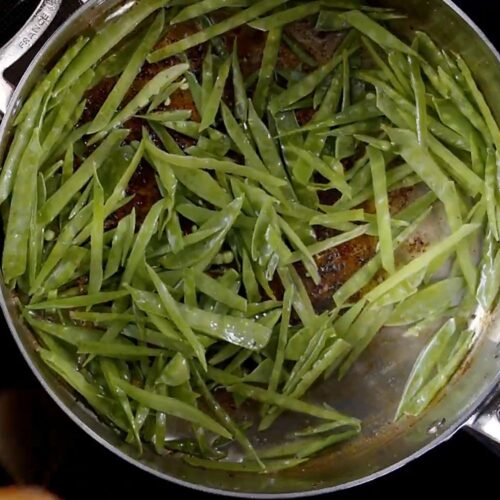
- Add Red Onion: Add the finely diced red onion to the skillet with the snow peas. Stir and cook for 1–2 minutes until the onion begins to soften and becomes fragrant.
- Add Garlic: Stir the chopped garlic into the snow peas and red onion. Cook for approximately 30 seconds, stirring constantly to prevent the garlic from burning.
- Add Lime Zest: Sprinkle the freshly grated lime zest over the vegetables. Stir for about 15–20 seconds, allowing the zest to release its citrus aroma and blend with the other ingredients.
- Add Ginger Paste: Spoon the ginger spice paste into the skillet. Stir thoroughly to coat the vegetables and cook for approximately 1 minute until the ginger becomes fragrant.
- Add Hot Pepper Sauce: Pour the hot pepper sauce into the skillet and stir for about 30 seconds until the vegetables are evenly coated. Reduce the heat to low while preparing the noodle sauce to prevent the garlic and other aromatics from burning.
- Prepare Sauce Base: In a medium mixing bowl, combine the chicken stock, freshly squeezed lime juice, and soy sauce. Whisk gently until the liquids are well blended.
- Sweeten Sauce: Add the honey to the chicken stock mixture. Whisk until the honey completely dissolves and the sauce is smooth and evenly combined.
- Add Stir-Fry Noodles: Increase the skillet heat to medium. Add the cooked stir-fry noodles to the vegetables. Use kitchen tongs to gently separate and toss the noodles, distributing the vegetables evenly throughout.
- Pour Sauce: Slowly pour the prepared sauce mixture over the noodles and vegetables. Toss gently with kitchen tongs until everything is evenly coated. Cook over medium heat for 3–4 minutes, stirring occasionally, until the noodles are heated through and have absorbed some of the sauce. The remaining sauce should lightly coat the noodles without making them dry.
- Return Pork: Add the cooked pork strips and any juices collected on the plate back into the skillet. Toss gently with the noodles and vegetables until evenly combined. Cook for another 1–2 minutes until the pork is heated through and coated with the flavorful sauce.
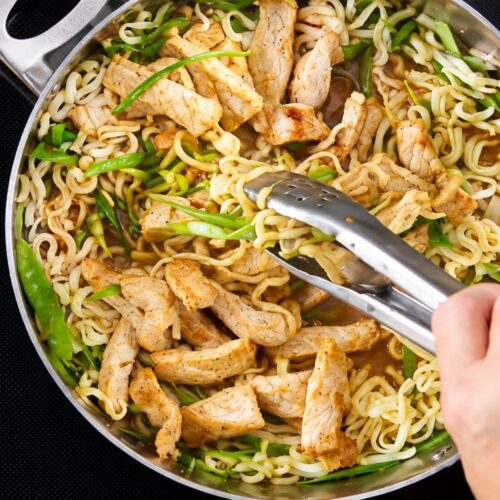
- Serve Noodles: Remove the skillet from the heat. Using kitchen tongs, divide the hot pork noodles evenly between two serving bowls. Make sure each bowl gets a generous portion of pork, snow peas, and noodles.
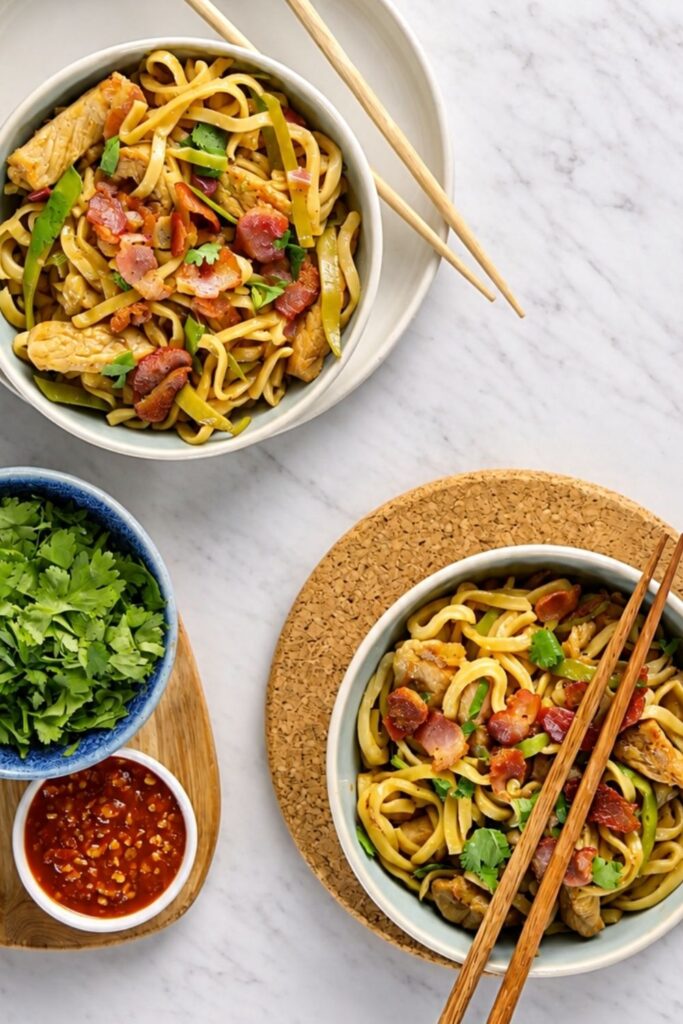
- Garnish with Cilantro: Sprinkle the freshly chopped cilantro over each serving, spreading it evenly across the noodles for a bright, fresh finish.
- Finish with Bacon: Scatter the reserved crispy bacon pieces over the cilantro-topped noodles. Serve immediately while the pork and noodles are hot and the bacon is still deliciously crispy.
Video Recipe
Thai-Style Pork Noodle Bowl Tips, Tricks, and Lazy Kitchen Wins
I’ve made enough noodle bowls to know that a few little tricks can save dinner from becoming a sticky mess. Because nobody has time for sad noodles and extra dishes.
Don’t Turn Your Pork Into Shoe Leather
Thinly sliced pork cooks fast, so don’t leave it in the skillet while you scroll through your phone. My trick is to slice it against the grain and pull it off the heat as soon as it’s done. Tender pork is the goal, not something you need a steak knife to chew. Aim for 145°F with a 3-minute rest.
Bacon Makes Everything Better
Thick-cut bacon gives you bigger, meatier bites, while regular bacon gets crispier faster. Either works beautifully. Save a little bacon fat for cooking the pork. It’s basically free flavor, and throwing it all away would be a questionable life choice.
No Snow Peas? No Problem!
Sugar snap peas work great if you want extra crunch. Thinly sliced bell peppers or shredded cabbage are also solid options. I’ve used whatever crunchy vegetables were hiding in my fridge, and nobody complained. Just adjust the cooking time so they stay crisp instead of turning into mush.
The Noodle Shortcut Nobody Talks About
Pre-cooked stir-fry noodles are a weeknight lifesaver. If you can’t find them, use cooked lo mein, ramen, or even spaghetti. Yes, spaghetti works. The noodle police aren’t coming. Just avoid overcooking them since they’ll soften more when tossed with the sauce.
Fresh Ginger Is Great, but I’m Lazy
Ginger paste is my favorite shortcut because peeling and grating fresh ginger isn’t always my idea of fun. If you only have fresh ginger, use about 1 tablespoon, finely grated. The squeeze tube deserves more respect than it gets. Keep some in the fridge for last-minute noodle emergencies.
Control the Heat Before It Controls You
Hot pepper sauces vary wildly in spice level, so don’t assume they’re all equally friendly. Start with half the amount if you’re sensitive to heat, then add more after tasting. I’ve learned this lesson the sweaty way. A little honey can help balance the heat if your sauce gets too aggressive.
Give That Sauce a Taste Test
Different soy sauce brands have different salt levels, and bacon brings plenty of salt to the party. Low-sodium soy sauce is a smart choice if you want more control. Taste before adding anything extra. If the sauce seems too salty, a splash of unsalted chicken stock can help mellow it out.
Don’t Crowd the Skillet
A crowded skillet steams your pork instead of browning it. If you’re doubling the recipe, cook the meat in batches. A little patience gets you better flavor, even if cooking everything at once sounds like the lazy genius move. Sometimes shortcuts backfire. Rude, but true.
Keep the Lime Fresh and Bright
Fresh lime juice gives the sauce a lively kick, but bottled lime juice works in a pinch. If you’re using bottled juice, start with a little less and adjust to taste. Fresh lime zest is worth the extra 30 seconds, though. It adds a citrusy punch that bottled juice can’t quite copy.
Make It Your Own
Not a pork fan? Thinly sliced chicken breast or boneless chicken thighs make excellent swaps. Shrimp works too, but cooks much faster. I’ve made this with whatever protein needed rescuing from the fridge. Just cook each option to its proper safe temperature before combining it with the noodles.
Save Yourself Some Prep Time
Buy pre-trimmed snow peas, pre-chopped garlic, and ready-to-use noodles if you’re short on time. You can also mix the sauce a day ahead and refrigerate it in a covered container. I’m all for homemade food, not unnecessary kitchen suffering. A little prep makes dinner much easier.
Leftovers Need a Little Love
Store leftovers in an airtight container in the refrigerator for up to 3–4 days. Keep the crispy bacon separate if possible so it doesn’t turn soft and sad. A splash of chicken stock works wonders when reheating because noodles love soaking up every last drop of sauce. Reheat until steaming hot, or to 165°F.
Can You Freeze It? Technically, Yes
The cooked pork freezes fairly well, but the noodles and snow peas can lose their texture after thawing. I’d freeze the cooked pork separately and make fresh noodles later. You’ll get a much better bowl without dealing with soggy vegetables and noodles that have completely given up.
The Final Crunch Is Nonnegotiable
Don’t add the crispy bacon too early, or it’ll soften in the sauce. Sprinkle it on right before serving, along with the cilantro. If cilantro tastes like soap to you, sliced green onions make a great substitute. That last-minute crunch is what makes everyone think you worked harder than you did.