
I started making this on a night when I wanted dinner to feel impressive without actually doing anything impressive, and this recipe absolutely understood the assignment.
The salmon poaches in coconut broth like it has nowhere else to be, while the rice quietly handles its business, because apparently dinner can be both lazy and classy.
Now it is one of those meals I make when I want something warm, cozy, and a little smug-looking on the plate, and yes, it tastes as good as it looks for once.

Coconut Poached Salmon With Rice
EQUIPMENT (PAID LINKS)
- Medium saucepan with lid
- Large deep skillet or sauté pan
- Tongs or fish spatula
- Plate
Ingredients
- 1 ½ cups unsalted vegetable stock
- 1 cup jasmine rice
- ½ cup thinly sliced shallots divided
- 1 ½ teaspoons kosher salt divided
- 1 cup thinly sliced leeks
- 1 tablespoon minced fresh ginger
- 2 cups coconut milk
- ¼ teaspoon crushed red pepper
- 1 ½ cups unsalted vegetable stock
- 4 salmon fillets about 5 to 6 ounces each
- 3 cups frozen Asian vegetable mix
Instructions
- Cook the Rice: Bring 1 ½ cups vegetable stock to a boil in a medium saucepan over medium-high heat. Stir in the jasmine rice, ¼ cup of the shallots, and ½ teaspoon of the salt. Reduce the heat to low, cover, and cook for about 15 minutes.
- Build the Poaching Base: While the rice cooks, add the leeks, the remaining ¼ cup shallots, the ginger, and another ½ teaspoon of the salt to a large deep skillet over medium heat. Cook for about 2 minutes, stirring often, until the vegetables begin to soften.
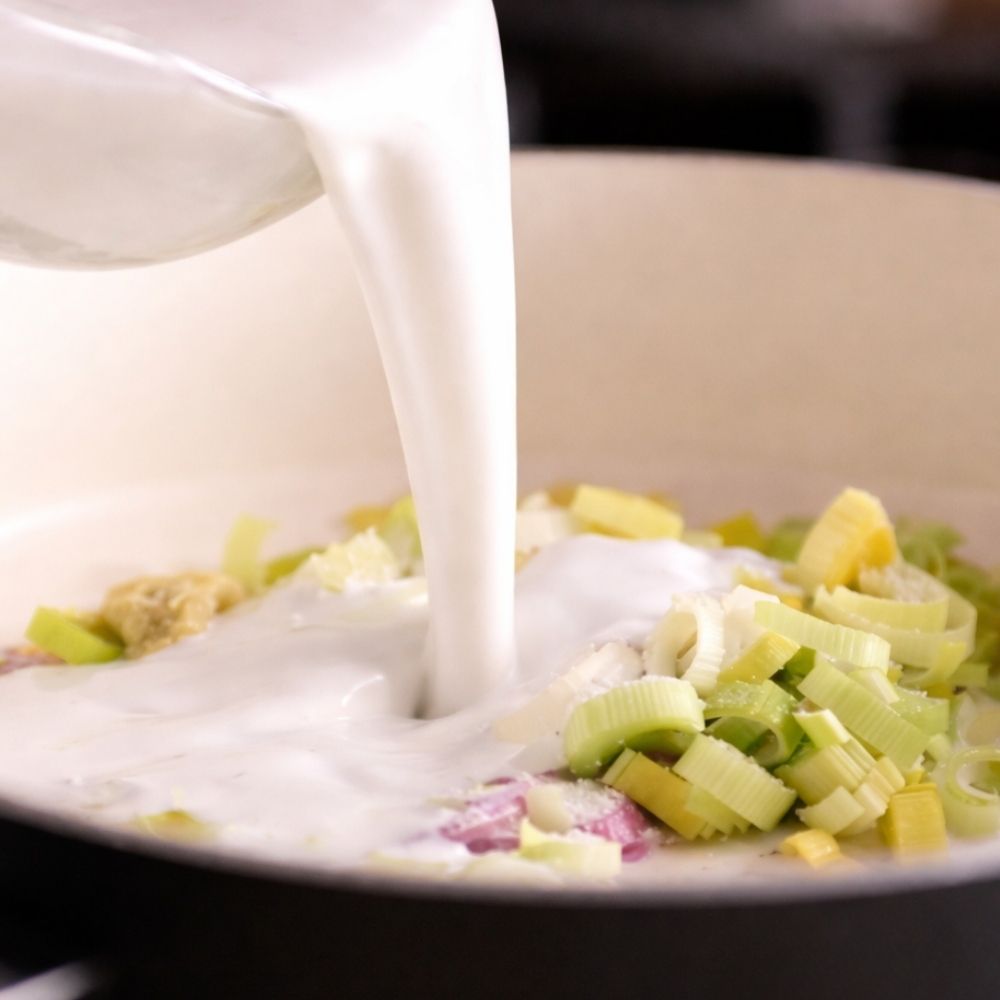
- Add the Liquid: Pour in the coconut milk and the remaining 1 ½ cups vegetable stock. Stir in the crushed red pepper and bring the mixture to a gentle simmer over medium-low heat.
- Season the Salmon: Sprinkle the salmon fillets with the remaining ½ teaspoon salt.

- Poach the Salmon: Place the salmon fillets into the simmering coconut mixture in a single layer. Keep the heat low to medium-low so the liquid stays at a gentle simmer, and cook for 6 to 8 minutes, until the salmon is opaque and flakes easily.
- Set Aside the Salmon: Carefully lift the salmon out with tongs or a fish spatula and transfer it to a plate.
- Cook the Vegetables: Add the frozen Asian vegetable mix to the skillet with the coconut poaching liquid. Simmer over medium heat for 3 to 5 minutes, stirring occasionally, until the vegetables are heated through and tender-crisp.
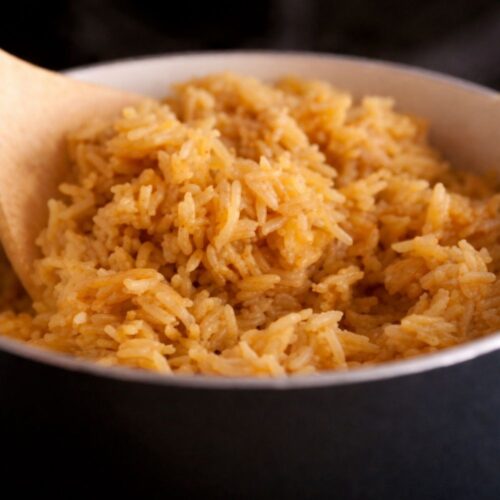
- Finish the Rice: Once the rice is done, remove it from the heat and let it sit covered for about 5 minutes if needed. Fluff with a wooden spoon.
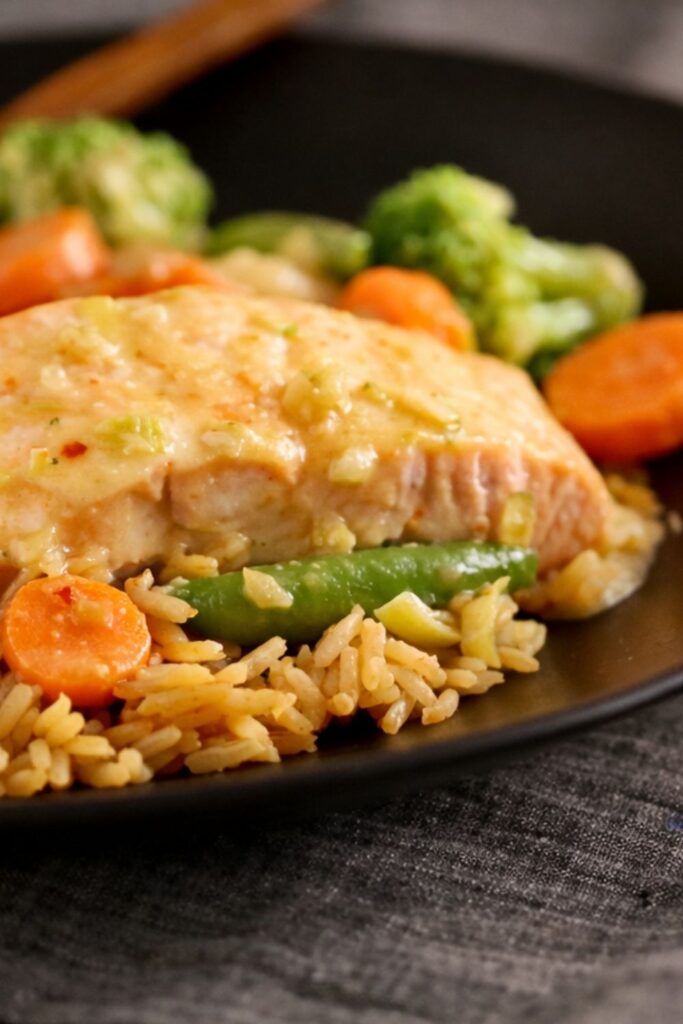
- Serve the Dish: Spoon the rice onto plates, top with the vegetables, and place a salmon fillet on each serving. Spoon some of the coconut broth over the top and serve warm.
Video Recipe
Coconut Poached Salmon with Rice: Tiny Tricks for Maximum Glory
These are the little things that save dinner when your energy level is somewhere between “meh” and “absolutely not.” Read this now so you can look weirdly competent later.
Keep the Salmon Gentle
If you let the coconut broth boil like it is auditioning for a disaster movie, the salmon can turn dry fast. A lazy little simmer is the whole secret, so keep the heat low and let the fish ease into doneness instead of getting aggressively bullied by the pan.
Coconut Milk Has Moods
Full-fat coconut milk gives you the richest, silkiest broth, and yes, it is worth it. If the can is separated when you open it, just stir it together and move on because coconut milk loves showing up looking emotionally unavailable.
Leeks Need a Little Respect
Leeks are great, but they are also basically dirt with good PR if you do not rinse them well. I usually slice them first, then rinse them in a bowl of water so all the grit drops to the bottom, because nothing ruins a cozy dinner faster than unexpected crunch.
Shallots Are Nice, but Not Mandatory
If you are out of shallots, a little thinly sliced yellow onion works just fine and nobody needs to make it a whole thing. Red onion can work too in a pinch, but use less unless you want the broth tasting like it has a strong opinion.
Ginger Shortcuts Are Allowed
Fresh ginger is great, but on a weeknight, I have absolutely reached for the squeeze-tube ginger and lived to tell the tale. Frozen ginger cubes work too, and this is not the meal where anyone should be hand-grating with unnecessary heroism.
Use the Vegetable Mix You Actually Have
“Asian vegetable mix” is convenient, but honestly, this recipe is pretty forgiving if your freezer is full of something else. Broccoli, snap peas, carrots, green beans, or even spinach can step in, because the freezer bag does not need to match the fantasy.
Rice Can Be Flexible
Jasmine rice is the best fit if you want that soft, fragrant vibe, but basmati works if that is what is hanging around the pantry. You can even use microwave rice when life gets messy, and I fully support cheating when the cheat still tastes good.
Do Not Overcrowd the Pan
If the salmon fillets are packed in too tightly, they cook unevenly and you end up poking at them like you are defusing something. Give them a little space, or cook in batches if needed, because salmon likes personal boundaries just like the rest of us.
The Broth Is the Best Part
Before serving, spoon that coconut broth over the rice and salmon like you mean it. The rice soaks it up and suddenly tastes like you planned ahead, when really the sauce is doing all the heavy lifting and we love that for us.
Leftovers Need Low Expectations and Low Heat
This keeps pretty well in the fridge for a couple of days, but reheat it gently so the salmon does not turn into expensive flakes of regret. I warm it in a pan over low heat with a splash of broth or water, because the microwave is fast, but it is not always your friend.
Make It Feel Fancier Than It Is
If you happen to have lime, cilantro, or green onions around, tossing a little on top makes the whole thing look much more put together. I do this when I want dinner to seem intentional, because a garnish is basically a tiny edible lie and I respect that.