
I started making this Greek salad on days when cooking felt like too much effort, and somehow it still made me look like I had my life together. It’s basically the edible version of “I tried, but not that hard.”
There’s something oddly satisfying about tossing together crunchy veggies, salty olives, and creamy feta and calling it a meal. No stove, no stress, just vibes and a lot of chopping.
Now it’s my go-to when I need something fresh but refuse to overthink it. Because honestly, if a salad can’t be this easy, what are we even doing?
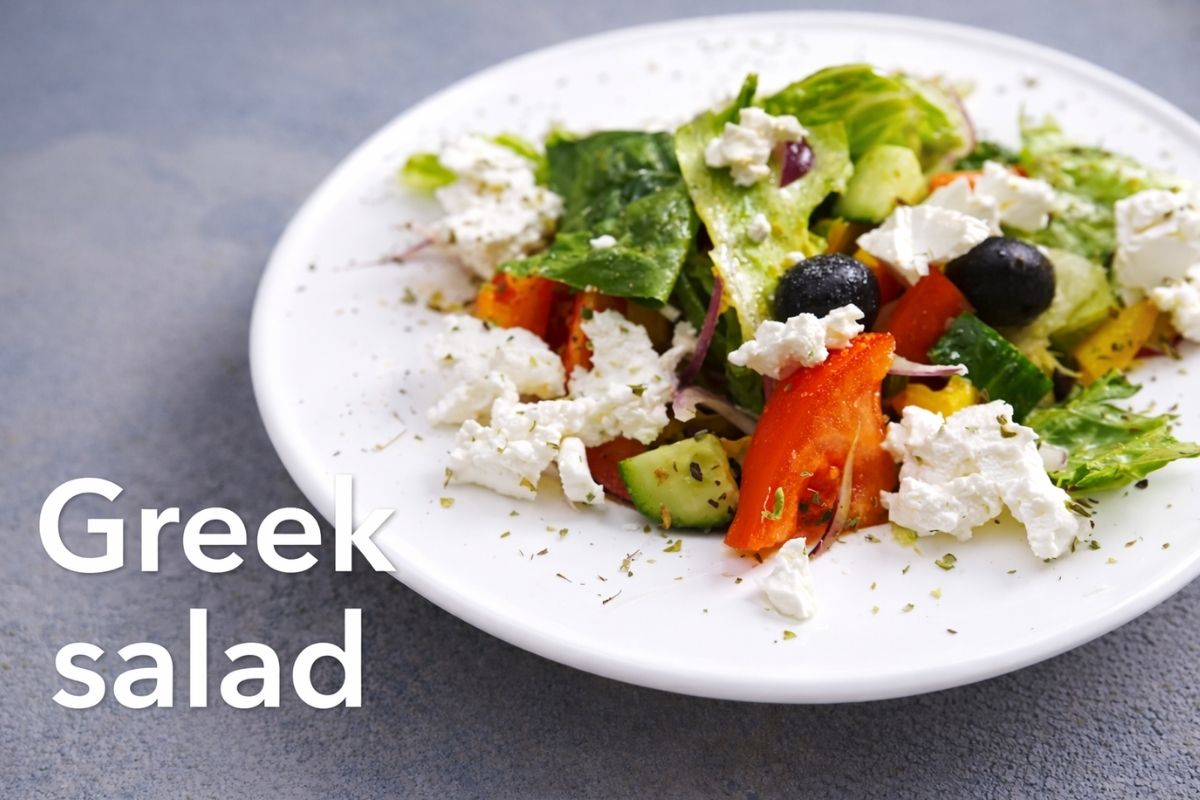
Greek salad
EQUIPMENT (PAID LINKS)
Ingredients
- 4 cups lettuce leaves torn into bite-size pieces
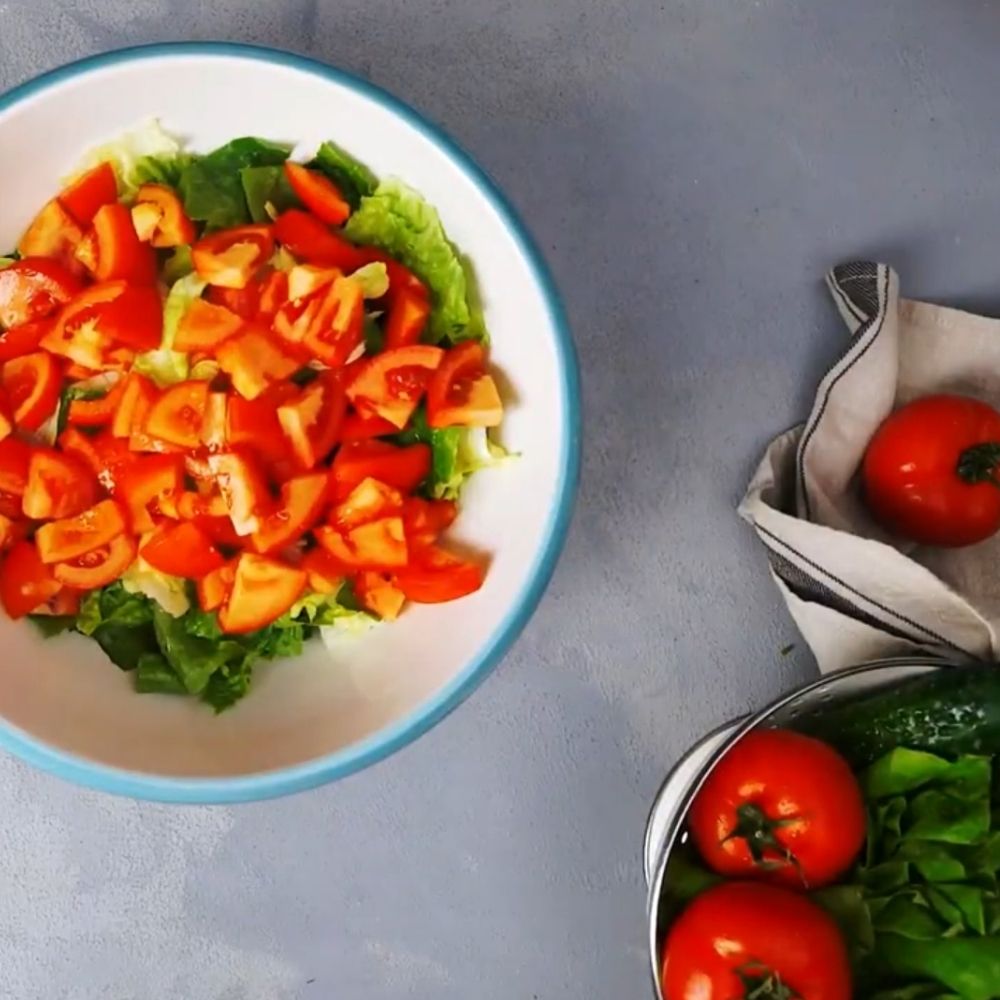
- 3 medium tomatoes chopped
- 1 bell pepper chopped
- 1 cucumber chopped about 1 ½ cups
- ¼ red onion thinly sliced
- ½ cup black olives
- 2 tablespoons olive oil
- ½ teaspoon sea salt
- ½ cup feta cheese crumbled
Instructions
- Build Base: Place the torn lettuce leaves in a large mixing bowl to create the base of the salad.
- Add Vegetables: Add the chopped tomatoes, bell pepper, and cucumber evenly over the lettuce.
- Add Onion and Olives: Sprinkle the thinly sliced red onion and black olives across the salad.
- Dress Salad: Drizzle the olive oil evenly over all the ingredients.
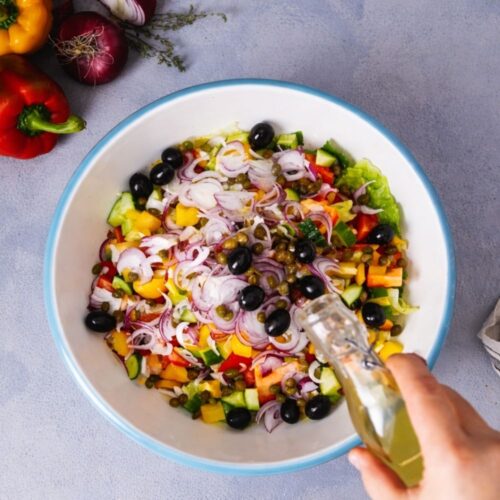
- Season: Sprinkle the sea salt over the top.
- Toss Gently: Lightly toss everything together until combined, being careful not to crush the vegetables.
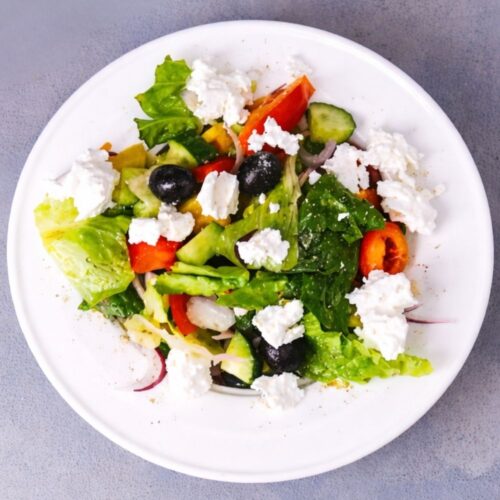
- Finish with Feta: Sprinkle the crumbled feta cheese over the top just before serving.
Video Recipe
Greek Salad Survival Guide (a.k.a. How to Look Fancy Without Trying)
If you’ve ever chopped vegetables and called it dinner, congrats—you’re already halfway there. Let’s make it taste like you meant to impress someone.
Lettuce or No Lettuce? The Ongoing Drama
Traditional Greek salad doesn’t even include lettuce, but here we are. If you like the crunch, keep it, but if it starts getting soggy five minutes later, ditch it next time. Honestly, skipping lettuce makes this feel instantly more “authentic” and less like a side salad at a diner.
Tomato Quality Matters (Unfortunately)
This salad lives or dies by your tomatoes, which is rude but true. If they’re pale and sad, your salad will be too. If your tomatoes don’t smell like anything, they won’t taste like anything—no amount of olive oil will save you. Use the ripest ones you can find or even cherry tomatoes if that’s what looks good.
Slice That Onion Like You Mean It
Red onion can go from “nice bite” to “why am I crying and also angry” real fast. Slice it super thin, or soak it in cold water for a few minutes to mellow it out. This is the difference between balanced flavor and accidentally bullying your own taste buds.
Olive Oil Is Not the Place to Be Cheap
Since there’s barely any dressing, your olive oil is doing all the heavy lifting. Use one that actually tastes good, not the dusty bottle hiding in the back of your cabinet. This is one of those times where “meh” oil will absolutely betray you.
Feta: Chunky > Crumbly
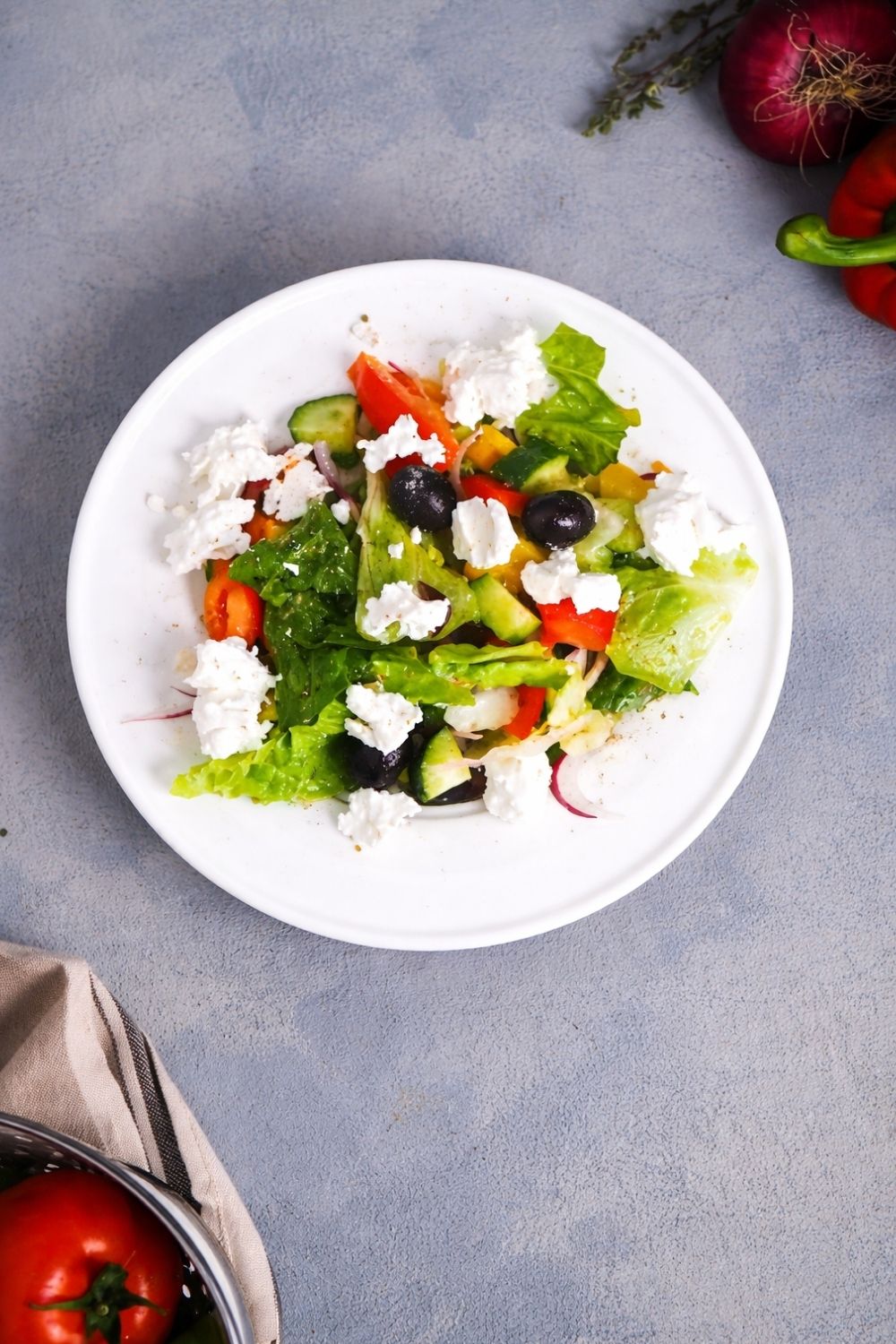
Pre-crumbled feta is convenient, but it’s usually drier and less flavorful. If you can, buy a block and break it up yourself. Big, uneven chunks feel fancy and taste better—it’s science (probably).
Make It a Meal Without Trying Too Hard
If you want to bulk it up, toss in some grilled chicken, chickpeas, or even leftover rotisserie chicken. This is peak lazy genius—same salad, suddenly dinner.
Don’t Dress It Too Early
This salad gets soggy fast if it sits too long after dressing. If you’re prepping ahead, keep everything separate and combine right before serving. Nobody wants a sad, watery salad that gave up before you did.
Salt Last, Always
Salt pulls water out of veggies, especially tomatoes, so add it right before serving. If you salt too early, you’ll end up with a soup… and not the good kind.