
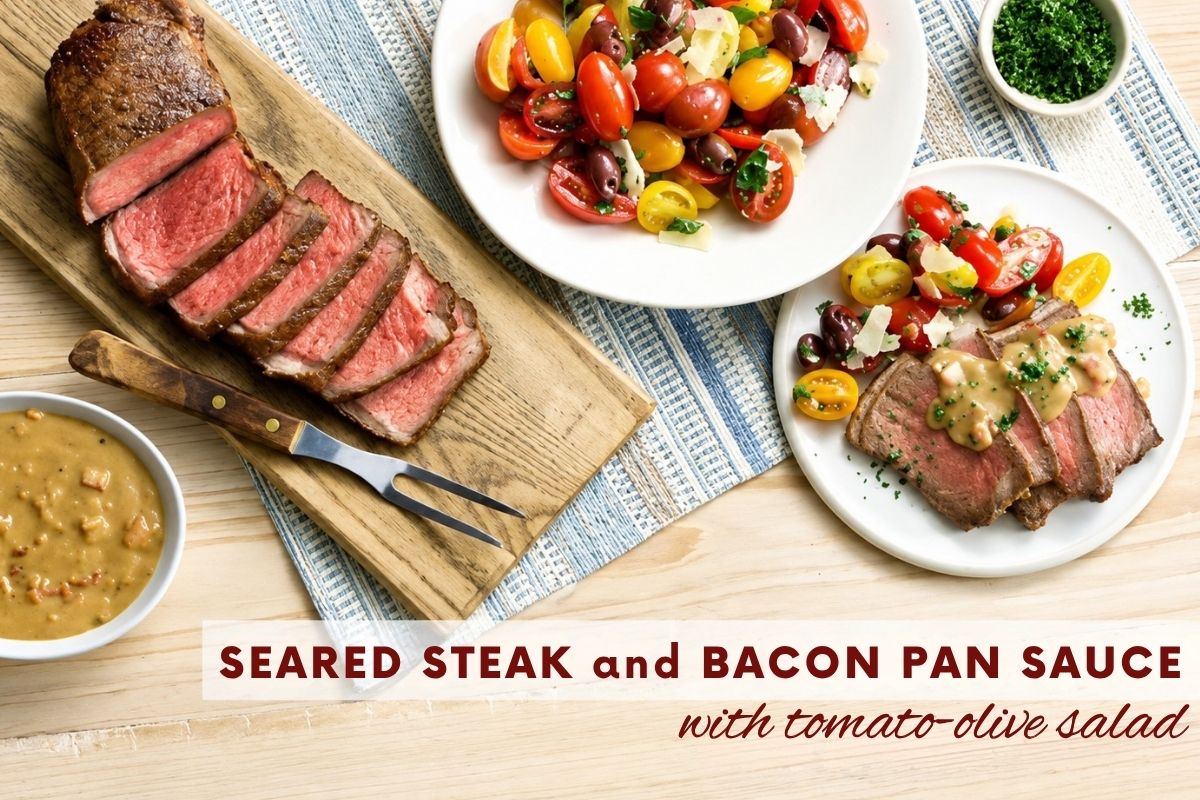
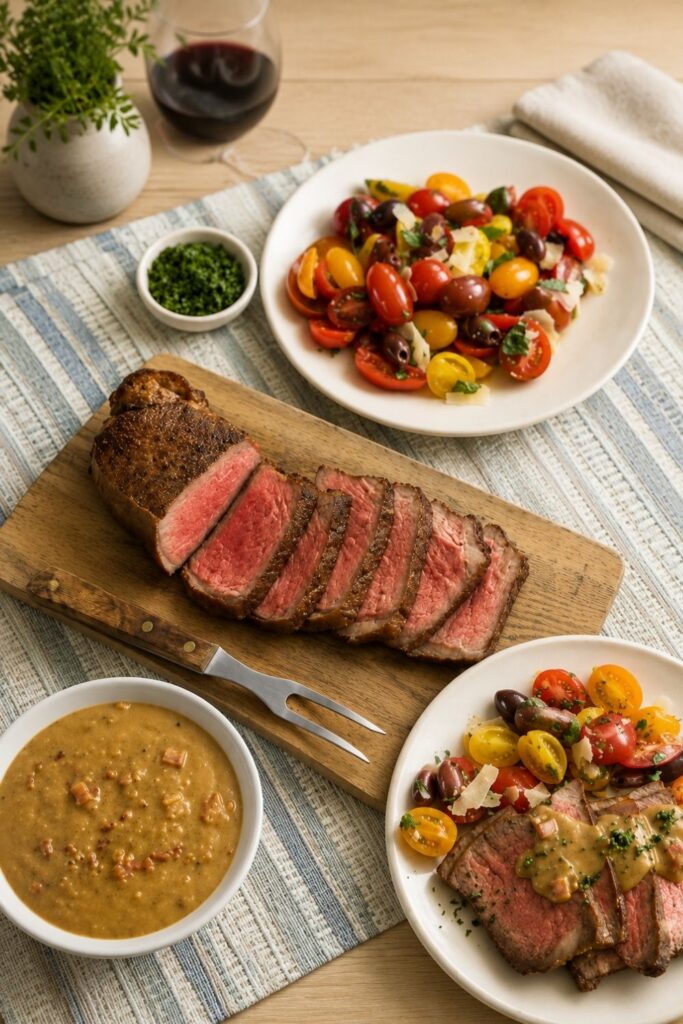
This steak does the most. It roasts, sears in bacon fat, then gets a rich pan sauce because subtlety clearly took the night off.
I first made it on a busy Friday, when I wanted dinner to feel fancy without wearing real pants. Mission accomplished.
The tomato-olive salad saves the plate. It’s bright, salty, and fresh enough to make all that bacon seem responsible.
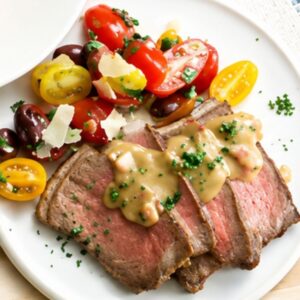
Seared Steak and Bacon Pan Sauce with Tomato-Olive Salad
EQUIPMENT (PAID LINKS)
- Rimmed baking sheet
- Wire rack
- Oven
- Instant-read meat thermometer
- Slotted spoon
- Heatproof bowl
Ingredients
- 1 thick-cut New York strip steak about 2 pounds
- 2 teaspoons kosher salt divided
- 1 teaspoon ground black pepper divided
- 8 ounces thick-cut bacon diced
- 2 large shallots finely chopped
- ¼ cup all-purpose flour
- 2 cups beef stock
- 2 pints mixed red and yellow cherry or grape tomatoes halved
- 1 cup pitted Kalamata olives
- ½ cup chopped fresh basil
- 2 ounces shaved Parmesan cheese
- ¼ cup olive oil
Instructions
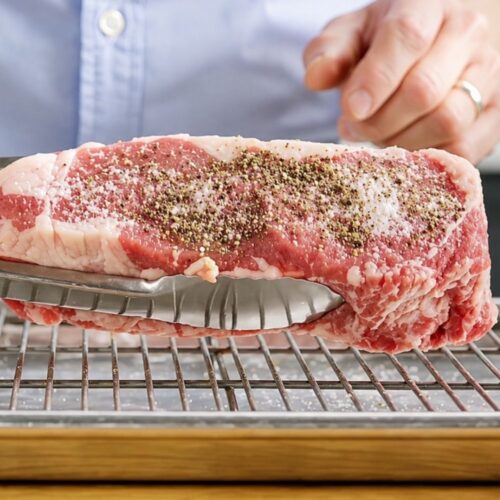
- Season Steak: Place the steak on a wire rack set inside a rimmed baking sheet. Season all sides with 1½ teaspoons kosher salt and ¾ teaspoon black pepper.
- Roast Steak: Preheat the oven to 250°F. Roast the steak for 35 to 45 minutes, or until the center reaches 120°F on an instant-read thermometer.
- Cook Bacon: While the steak roasts, place the diced bacon in a large skillet over medium heat. Cook for 8 to 10 minutes, stirring occasionally, until browned and crisp.
- Reserve Bacon and Fat: Transfer the cooked bacon to a heatproof bowl using a slotted spoon. Carefully pour off any excess bacon fat, leaving about ¼ cup in the skillet.
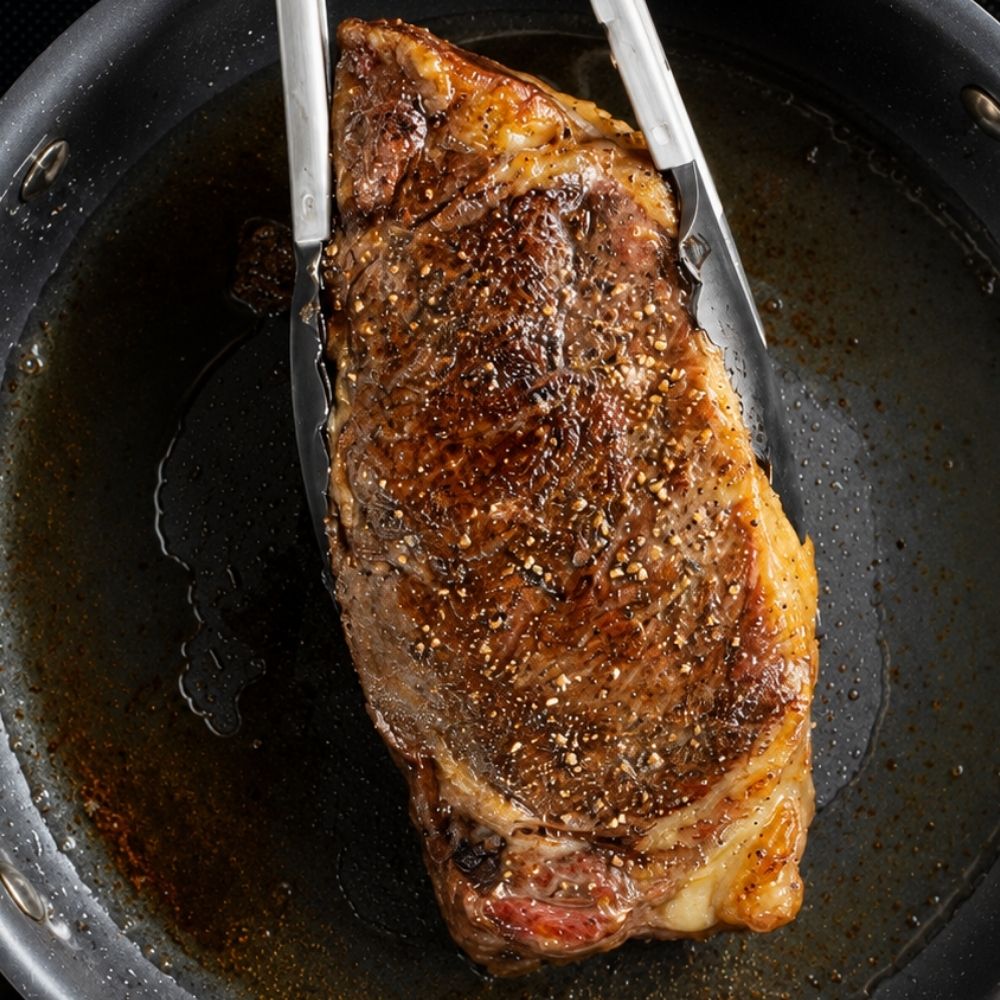
- Sear Steak: When the steak reaches 120°F, remove it from the oven. Heat the bacon fat over medium-high heat and sear the steak for 1 to 2 minutes on each broad side.
- Sear Edges: Hold the steak with tongs and sear the edges and fat cap for 30 to 60 seconds per section. The center should reach about 125°F to 130°F for medium-rare before resting.
- Rest Steak: Transfer the steak to a clean cutting board. Let it rest for 10 minutes while you prepare the sauce and salad.
- Cook Shallots: Reduce the skillet heat to medium. Add the chopped shallots and cook for about 2 minutes, stirring frequently, until softened.
- Cook Flour: Sprinkle the flour over the shallots and bacon fat. Stir continuously for about 1 minute, making sure no dry flour remains.
- Make Pan Sauce: Slowly pour in the beef stock while stirring and scraping the browned bits from the bottom of the skillet. Simmer over medium heat for 4 to 5 minutes, stirring occasionally, until smooth and thickened.
- Add Bacon: Return the cooked bacon to the skillet. Stir and simmer for 1 to 2 minutes, then reduce the heat to low to keep the sauce warm.
- Combine Salad: Place the halved tomatoes, Kalamata olives, chopped basil, and shaved Parmesan in a large mixing bowl.
- Dress Salad: Drizzle the olive oil over the salad. Add the remaining ½ teaspoon kosher salt and ¼ teaspoon black pepper.
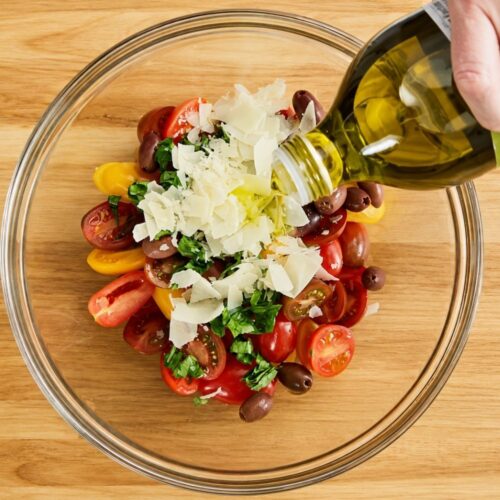
- Toss Salad: Gently toss until the tomatoes, olives, basil, and Parmesan are evenly coated with the oil and seasonings.
- Slice Steak: After the steak has rested, slice it against the grain into thick slices. Its final temperature should be about 130°F to 135°F for medium-rare.
- Serve: Arrange the sliced steak on a serving platter or individual plates. Spoon the warm bacon pan sauce over the steak and serve with the tomato-olive salad.
Video Recipe
Seared Steak and Bacon Pan Sauce: Tips from Someone Who’s Made It Way Too Often
This dinner looks fancy, but we both know better. A few lazy-smart moves keep it impressive without turning your kitchen into a crime scene.
Buy a Thick Steak
Choose a New York strip that is at least 1½ inches thick. Thin steaks cook too quickly and leave almost no room for error. A thick steak gives you time to look confident, even when you’re checking the thermometer every thirty seconds.
Let the Thermometer Do the Thinking
Do not rely on poking the steak, timing it perfectly, or communicating with it spiritually. An instant-read thermometer is faster and far more dependable. Pull the steak a few degrees before your preferred temperature because it will keep cooking as it rests. Guessing doneness is how expensive meat becomes an expensive lesson.
Use Regular Bacon in a Pinch
Thick-cut bacon gives the sauce more texture, but standard bacon works just fine. Turkey bacon is less helpful because it does not release enough fat for the sauce, though you can add butter or olive oil to make up the difference. This is one of those recipes where bacon fat is doing actual work, not merely showing off.
Save Only the Fat You Need
Bacon can release a surprising amount of grease, especially when it senses you are wearing a clean shirt. Leave about ¼ cup in the skillet and pour the rest into a heatproof container. Too much fat can make the sauce oily instead of rich. Rich and greasy are cousins, not twins.
Swap the Shallots
No shallots hiding in the produce drawer? Use one small yellow onion or a few green onion whites. The flavor will be slightly sharper, but the sauce will survive the scandal. Finely chop whatever you use so it softens quickly and blends into the sauce.
Fix a Lumpy Sauce
Add the beef stock gradually and stir while you pour. If lumps still appear, whisk the sauce firmly or strain it before returning the bacon. I have rescued plenty of sauces this way, usually while pretending everything was going exactly as planned. A whisk is cheaper than starting over.
Adjust the Sauce Thickness
If the sauce becomes too thick, stir in a splash of beef stock or water. If it looks thin, let it simmer uncovered for another minute or two. Keep in mind that it thickens as it cools, so stop before it reaches gravy-wallpaper-paste territory.
Use a Different Stock
Beef stock gives the sauce its deepest flavor, but chicken stock works when that is what you have. Low-sodium stock is especially useful because the bacon already brings plenty of salt. Taste before adding more seasoning unless you enjoy drinking water all night.
Make the Salad Your Own
Cherry tomatoes are ideal, but chopped Roma tomatoes or ripe garden tomatoes work beautifully. Swap Kalamata olives for green olives, Castelvetrano olives, or even drained capers for a sharper bite. Feta can replace Parmesan if you want something creamier and saltier.
Keep the Tomatoes at Room Temperature
Cold tomatoes taste like damp little refrigerator marbles. Let them sit on the counter while the steak cooks so their flavor wakes up. Room-temperature tomatoes are a tiny effort with an annoyingly large payoff.
Add the Parmesan Last
Toss the tomatoes, olives, basil, and oil first, then gently fold in the shaved Parmesan. This keeps the cheese from breaking into sad little crumbs or sticking to the bottom of the bowl. It still tastes good either way, but we are aiming for “rustic,” not “dropped.”
Take the Shortcut on Prep
Buy pitted olives, pre-shaved Parmesan, and pre-cut bacon when available. You can also halve the tomatoes earlier in the day and refrigerate them, then bring them to room temperature before serving. Nobody hands out medals for pitting olives on a weeknight.
Rest the Steak Properly
Give the steak a full ten minutes before slicing. Cutting too soon sends the juices onto the cutting board instead of keeping them in the meat. Cover it loosely with foil if your kitchen is chilly, but do not wrap it tightly or the crust may soften.
Slice Against the Grain
Look for the direction of the muscle lines and cut across them instead of following them. This shortens the fibers and makes each bite more tender. You already paid for a good steak, so do not make your jaw finish the cooking.
Store the Leftovers Separately
Refrigerate the steak, sauce, and salad in separate airtight containers. The steak and sauce keep for about three days, while the tomato salad is best within one or two days. Keeping them apart prevents the salad from becoming soggy and the steak from soaking up every drop of sauce.
Reheat Without Ruining It
Warm sliced steak gently in a covered skillet over low heat with a spoonful of sauce. Reheat the remaining sauce separately, adding a splash of stock if it has thickened. Avoid blasting the steak in the microwave unless chewy leftovers are part of your personal growth journey.