
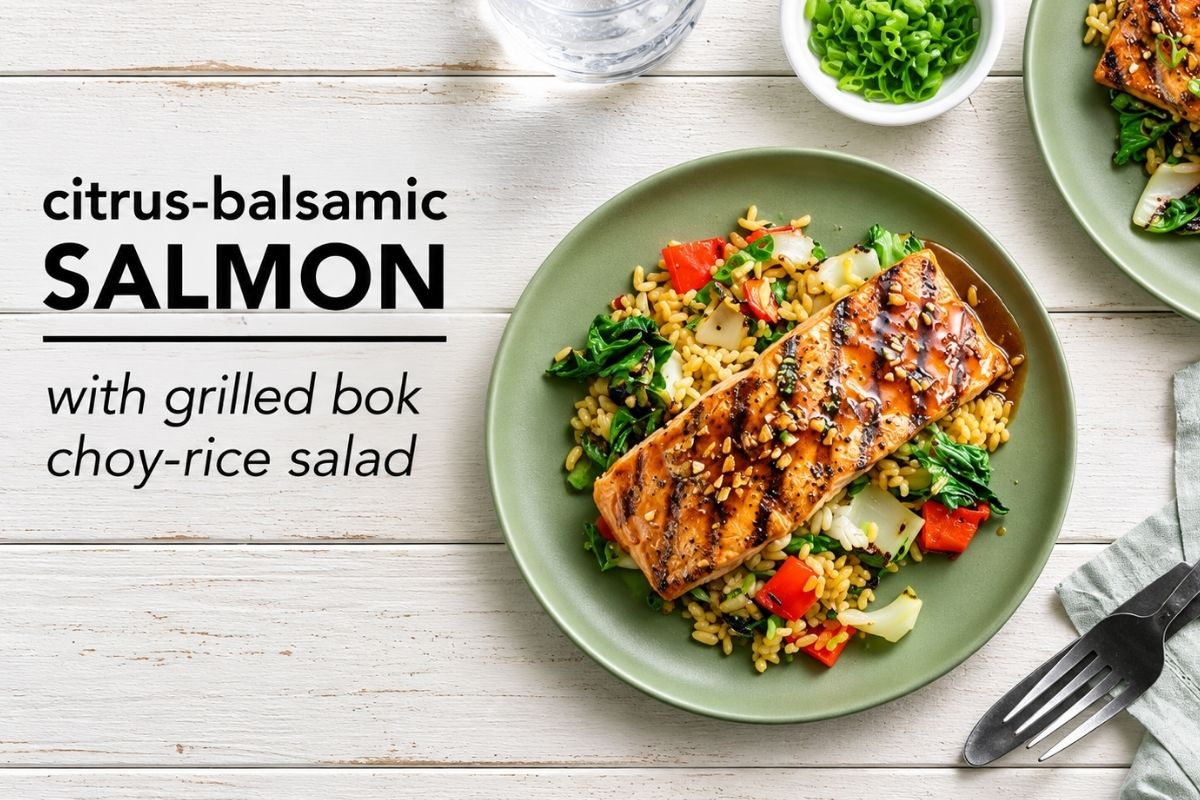
This salmon is sweet, tangy, and smoky, with just enough flair to look impressive without making dinner feel like a group project.
I made a version after a long day, and the charred bok choy saved the whole mood—dramatic, but honestly not inaccurate.
The rice soaks up every citrus-balsamic drop, while the salmon does the showing off. Conveniently, you get all the credit.
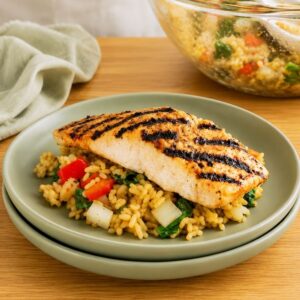
Citrus-Balsamic Salmon with Grilled Bok Choy-Rice Salad
EQUIPMENT (PAID LINKS)
- Citrus juicer
- Fine grater
- Medium mixing bowl
- Shallow dish
- Grill pan
- Wide spatula
- Serving plates
Ingredients
- 1 medium orange juiced, about ⅓ cup
- 1 tablespoon grated fresh ginger
- ¼ cup balsamic glaze
- 1 tablespoon soy sauce
- 2 large garlic cloves finely chopped
- ½ teaspoon crushed red pepper
- ¼ teaspoon ground black pepper
- 2 tablespoons canola oil
- 2 salmon fillets about 6 ounces each
- 1 large head bok choy
- 1 medium red bell pepper
- Cooking spray as needed
- 2 cups cooked brown rice
- 2 green onions thinly sliced
Instructions
- Prepare Citrus Sauce: Add the orange juice, grated ginger, balsamic glaze, soy sauce, chopped garlic, crushed red pepper, black pepper, and canola oil to a medium mixing bowl. Whisk until fully combined.
- Divide Sauce: Transfer 3 tablespoons of the citrus-balsamic sauce to a shallow dish for the salmon. Reserve 3 tablespoons in a separate clean container for serving, leaving the remaining sauce in the mixing bowl for the rice salad.
- Coat Salmon: Place the salmon fillets in the shallow dish and turn them to coat with the measured sauce. Keep the salmon separate from the clean reserved sauce.
- Prepare Bok Choy: Trim the base from the bok choy. Separate the leafy green portions from the thick white stalks, then cut the stalks into large wedges.
- Prepare Bell Pepper: Remove the stem, seeds, and white ribs from the red bell pepper. Cut the pepper into large, flat pieces that will sit easily on the grill pan.
- Coat Vegetables: Lightly coat the bok choy stalks, bok choy leaves, and bell pepper pieces with cooking spray.
- Grill Stalks and Pepper: Heat a grill pan over medium-high heat. Add the bok choy stalks and bell pepper pieces. Cook for about 3 minutes per side, or until tender-crisp with dark grill marks. Transfer them to a cutting board.
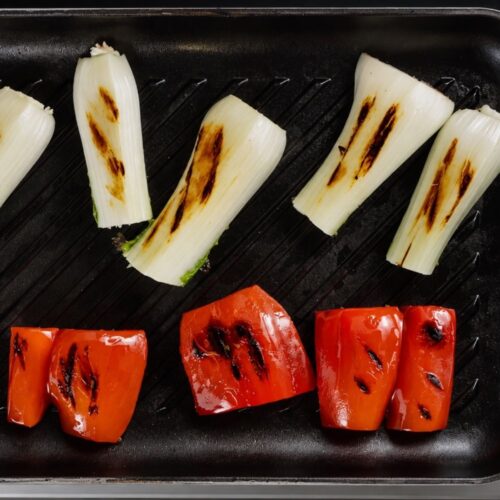
- Grill Bok Choy Leaves: Place the bok choy leaves in the hot grill pan. Cook for 1 to 2 minutes per side, until lightly charred and wilted. Transfer them to the cutting board.
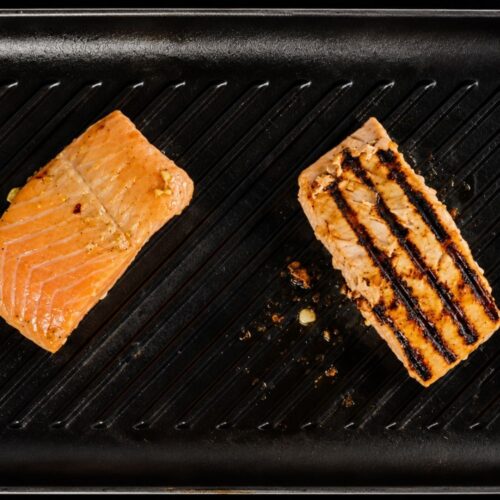
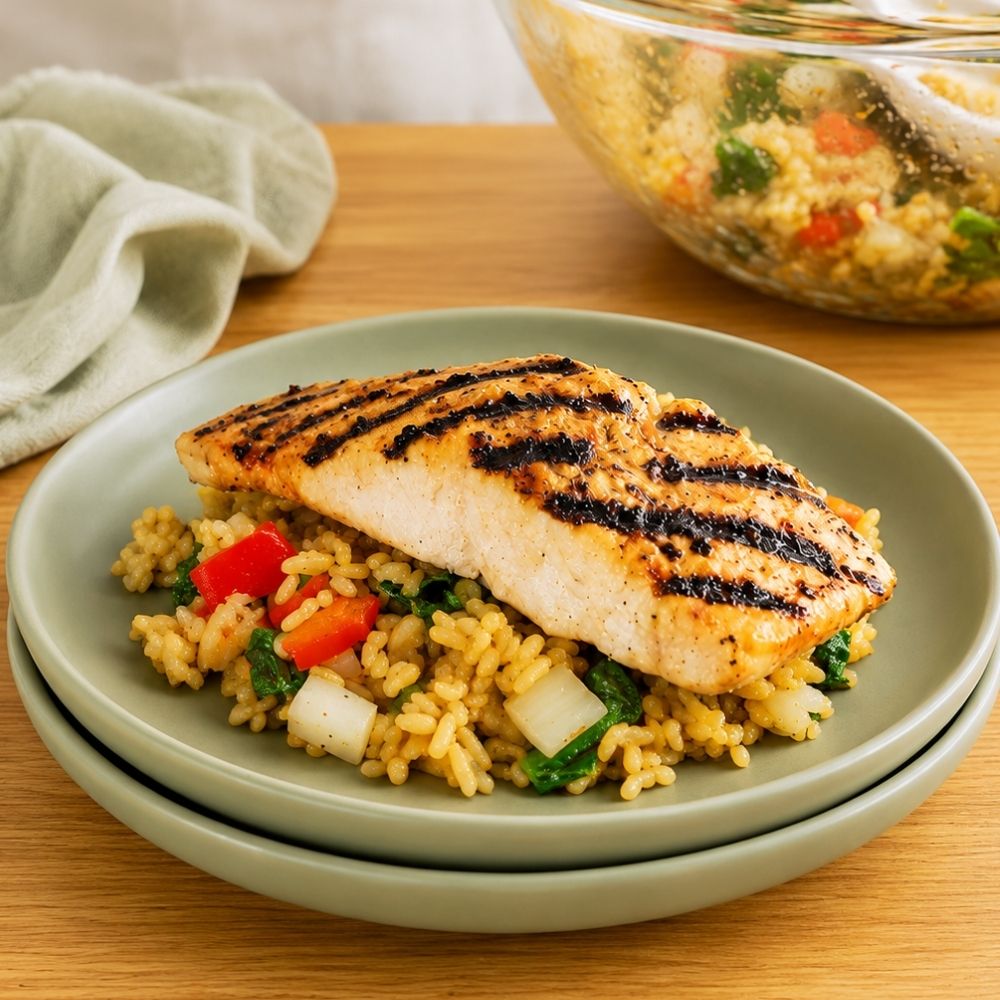
- Grill Salmon: Place the coated salmon fillets in the grill pan. Discard any sauce left in the shallow dish. Cook the salmon over medium-high heat for about 4 minutes on the first side. Flip and cook for another 3 to 4 minutes, or until the salmon is opaque in the center and flakes easily with a fork.
- Start Rice Salad: Place the cooked brown rice in a large mixing bowl.
- Chop Vegetables: Roughly chop the grilled bok choy stalks, bok choy leaves, and red bell pepper into bite-size pieces.
- Combine Salad: Add the chopped grilled vegetables and sliced green onions to the brown rice. Pour the remaining citrus-balsamic sauce from the mixing bowl over the salad and toss until evenly coated.
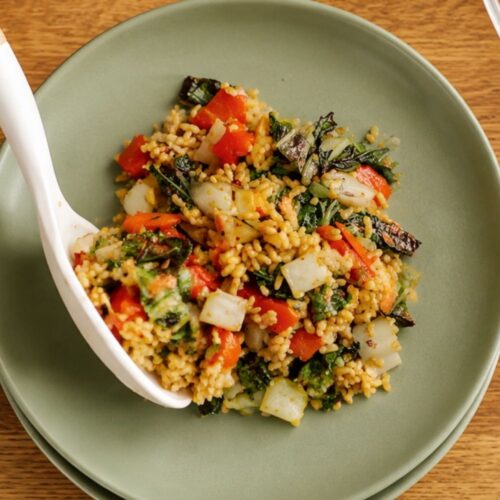
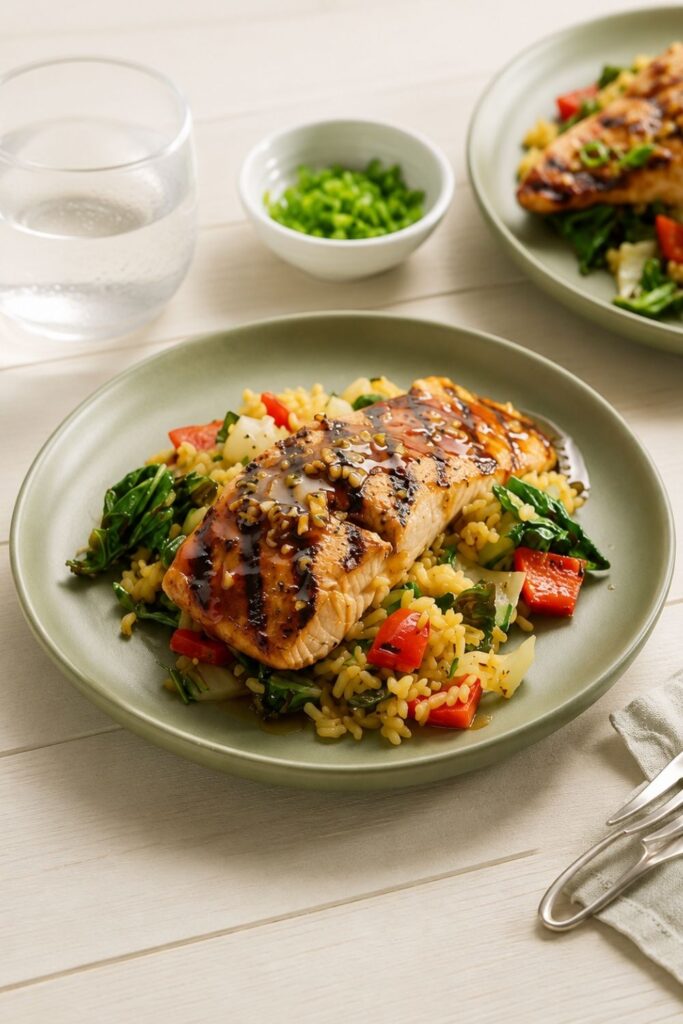
- Plate and Finish: Divide the grilled bok choy-rice salad between two plates. Place one salmon fillet over each serving and drizzle with the clean reserved citrus-balsamic sauce.
Video Recipe
Citrus-Balsamic Salmon with Grilled Bok Choy-Rice Salad: Fancy Dinner, Minimal Heroics
Read these before you start improvising halfway through dinner. I’ve already made the questionable choices so you don’t have to.
Keep the Salmon from Sticking
Let the grill pan get properly hot before adding the salmon, then leave it alone until it releases easily. If you start poking it every twelve seconds, it will fall apart purely out of spite.
Dry Salmon Is the Enemy
Pat the fillets dry before adding the sauce so they sear instead of steam. I usually pull them from the heat when the centers are just cooked, because salmon keeps cooking while it rests, whether invited to or not.
No Grill Pan, No Crisis
A regular skillet works perfectly well, especially a cast-iron one. You can also broil the salmon and vegetables, which is my favorite shortcut when I do not feel like standing over the stove pretending to be patient.
Swap the Bok Choy
Baby bok choy is easier to handle and cooks a little faster, but regular bok choy works just fine. Broccoli, asparagus, green beans, or sliced zucchini can step in when the grocery store has apparently decided bok choy is a mythical vegetable.
Use Whatever Rice Is Ready
Brown rice adds a nice chewy texture, but white rice, jasmine rice, quinoa, or farro will all work. Microwave rice is completely acceptable here, and no one handing out cooking medals needs to know.
Balance the Sauce
Balsamic glaze is sweeter and thicker than regular balsamic vinegar, so do not swap them cup for cup. When using vinegar, start with about half the amount and add a little honey or maple syrup until the sauce tastes tangy, sweet, and not like salad dressing having a bad day.
Adjust the Heat
Crushed red pepper brings warmth without setting off the smoke alarm in your mouth. Use less for a mild version, leave it out for picky eaters, or add a little more when dinner needs to fight back.
Save Time on the Prep
Use jarred minced garlic and refrigerated ginger paste when chopping feels overly ambitious. Slice the green onions and vegetables while the pan heats, because standing around watching cookware warm up has never improved anyone’s evening.
Keep the Sauce Safe
Always separate the finishing sauce before it touches raw salmon. Once sauce has been in the salmon dish, either discard it or boil it thoroughly—do not casually drizzle it over dinner and hope confidence kills bacteria.
Store the Leftovers Properly
Keep the salmon, rice salad, and extra sauce in separate airtight containers for up to three days in the refrigerator. Reheat the rice gently, but warm the salmon only briefly so it does not turn into a dry little brick.
Make Lunch from the Extras
Cold leftover salmon is surprisingly good flaked over the rice salad. Add cucumber, avocado, or a handful of greens, then drizzle on any remaining sauce and congratulate yourself for meal-prepping entirely by accident.